The Coastal States Organization represents the nation’s Coastal States, Territories, and Commonwealths on ocean, coastal, and Great Lakes resource issues. Having trouble opening links? View this on our website: https://coastalstates.org/resources/ |
|
Congress Advances Legislation Supporting America’s Coasts |
|
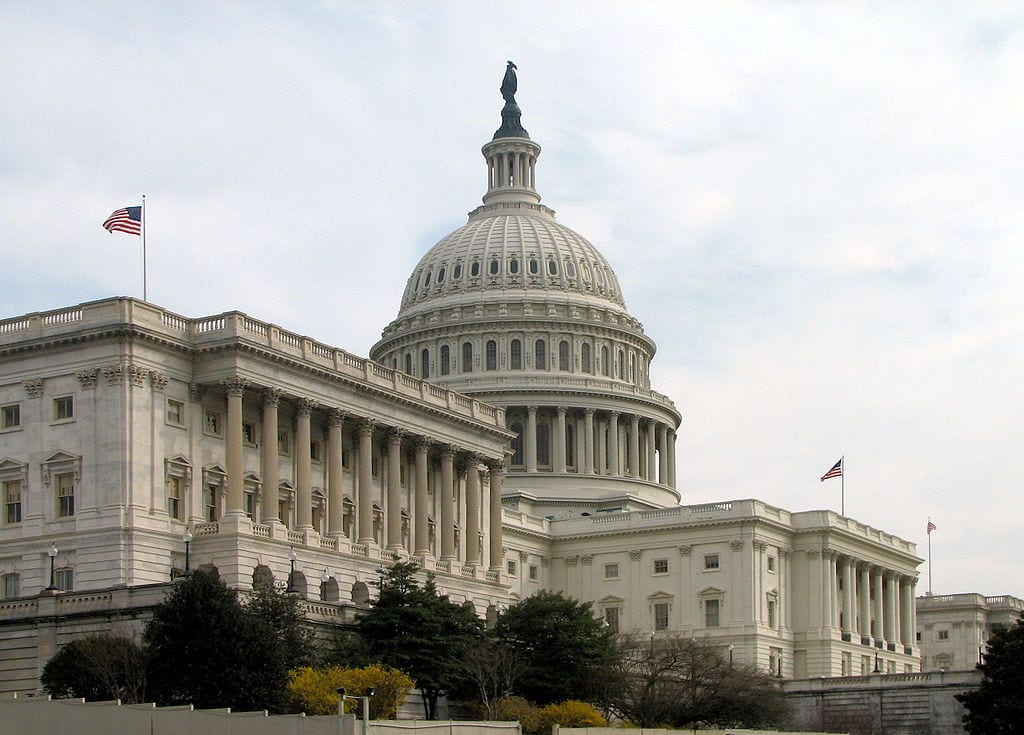
| In the past few months, both chambers of Congress have moved forward on legislation supporting America’s Coasts. Regional Ocean Partnership Reauthorization Act Introduced by a bipartisan group of Senators in early February, this bill would reauthorize NOAA’s Regional Ocean Partnerships (ROPs). Currently, there are four ROPs: the Gulf of American Alliance, the Northeast Regional Ocean Council, the Mid-Atlantic Regional Council on the Ocean, and the West Coast Ocean Alliance. ROPs are voluntarily convened by state governors in collaboration with local and federal government partners. They address regional ocean and coastal issues. “Mississippi and other coastal states share similar concerns regarding American waters, including the impact of harmful algal blooms and lack of data for oyster farmers,” said Senator Wicker (R-MS). “It is important for states to work together to provide solutions for the issues our coasts face today. This bill promotes regional collaboration, builds stronger data-base portals, and leverages funding to strengthen our Blue Economy and protect natural resources.” Digital Coast Reauthorization Act A bill to reauthorize NOAA’s Digital Coast program passed the Senate in mid-March, and the House bill has advanced out of committee. Digital Coast provides data and resources for coastal communities to plan for the future and prepare for coastal hazards such as storms and flooding. American Water Stewardship Act Last week, the House passed the American Water Stewardship Act. This legislation reauthorizes a number of coastal programs and bills, including the Great Lakes Restoration Initiative, EPA’s Geographic Programs, BEACH Act Grants, and the National Estuary Program. The programs in this bill work on areas like water quality, resilience, habitat restoration, and capacity building. |
|
FEMA to Relaunch Building Resilient Communities and Infrastructure Grants |
| Last Wednesday, the Federal Emergency Management Agency opened applications for a major resilience grant program that the agency canceled last year, less than three weeks after a federal judge ordered FEMA to make the funding available. FEMA will make $1 billion available for the Building Resilient Infrastructure and Communities program, which helps states, local governments, territories and tribes take on preparedness projects to harden against natural hazards like fires, floods, earthquakes and hurricanes. In the last decade, there have been almost as many weather- and climate-related disasters causing $1 billion in damages or more as there were in the 35 years preceding that, according to a Climate Central database. Multiple studies have shown that preemptive investments in disaster readiness can yield significant savings. A 2024 study funded by the U.S. Chamber of Commerce found every $1 invested in disaster preparation saved $13 in economic impact, damage and cleanup costs. Read more here. |
|
| In the States and Territories |
|
| Virginia – DEQ Receives Grant to Accelerate Bay Clean Up DEQ recently received $1,000,000 in National Fish and Wildlife Foundation (NFWF) grant funding for its project, Leveraging Regional Coordination to Accelerate Watershed Restoration in Virginia. The grant is awarded through NFWF’s Chesapeake Bay Innovative Nutrient and Sediment Reduction Program. This program aims to accelerate the implementation of water quality improvements through the collaborative efforts of sustainable, regional-scale partnerships and networks of practitioners with a shared focus on water quality restoration and protection. This project will accelerate the implementation of strategies and practices such as tree planting, wetlands restoration, and shoreline stabilization to meet local area planning goals based on local conditions, knowledge, and needs, improving water quality throughout Virginia’s Chesapeake Bay watershed. Read more here. Maine Researchers Document Loss of Coastal Eelgrass Findings from recent state surveys show steep declines in eelgrass beds between Penobscot Bay and Downeast Maine, results that are consistent with eelgrass losses documented in Casco Bay and elsewhere on the state’s coastline. The latest report from the state’s marine vegetation mapping program shows that nearly half the eelgrass was lost over the last two decades. Researchers from the Maine Department of Environmental Protection used aerial imaging validated by handheld cameras to map out areas of eelgrass and other marine plants that were found during the last surveys between 2003 and 2008. Eelgrass is an essential part of the marine ecosystem by improving water quality, anchoring sediment and providing habitat to juvenile fish and shellfish, including commercially valuable species. Read more here. |
| Texas – GLO Awards Over $39 Million for Coastal Preservation and Fortification Projects Texas Land Commissioner Dawn Buckingham, M.D., announced that the Texas General Land Office (GLO) has awarded approximately $39.06 million to coastal improvement projects in Texas’ Upper Gulf Coast Region through its Coastal Management Program (CMP) Grant Cycle 31 and Coastal Erosion Planning and Response Act (CEPRA) program Cycle 14. Commissioner Buckingham made these announcements at a series of check presentations in League City. CMP projects receive grant money from the National Oceanic and Atmospheric Administration (NOAA) and from the Gulf of Mexico Energy Security Act (GOMESA), along with a partner match. These projects include work ranging from preserving coastal habitat through land acquisition to restoring habitat through invasive species removal, improving coastal water quality management, and increasing public beach access. Read more here. Everglades Restoration Strengthens South Florida’s Climate Resilience, Study Finds Wetlands in southern Florida are playing a growing role in climate resilience and contributing to net greenhouse gas reduction, but the benefits are conditional and uneven across landscapes. The benefits are also vulnerable to hurricanes, sea level rise and other environmental pressures, according to a new study in the Proceedings of the National Academy of Sciences by a collaborative team of scientists including several from FIU. The research shows that restored wetlands across South Florida remove about 14 million metric tons of carbon dioxide from the atmosphere each year, which is equivalent to around 10 percent of the carbon dioxide emitted by Florida’s transportation sector. During the same time, methane emissions — a greenhouse gas produced by microbes in oxygen-poor soils — increased in some areas, offsetting some of the climate gains. However, the study shows carbon dioxide removal increased at roughly twice the rate of methane emissions, resulting in an 18 percent net increase in total greenhouse gas removal across the region. The study provides the most comprehensive picture to date of how freshwater marshes and coastal mangroves respond to restoration, water management and climate stressors along a gradient from inland wetlands to the coast. Read more here. |
| Michigan – Coastal Communities, Non-Profits, and Tribal Organizations Receive Coastal Management Program Grants The Department of Environment, Great Lakes, and Energy (EGLE) has awarded more than $855,497 in 2026 Michigan Coastal Management Program (MCMP) grants. As connectors and collaborators, the MCMP advances research and resilient planning methods, and seeks balanced approaches to a sustainable coastline. The funds will advance ten projects that support the efforts of coastal communities, non‑profit organizations, and Tribal Nations to protect, preserve, restore, enhance, and develop coastal resources along the longest freshwater coastline in the nation. The Bay Mills Indian Community was awarded a $150,000 grant to create design for marina rehabilitation of the Bay Mills Indian Community Marina. The Oscoda Charter Township was awarded a $250,000 grant to enhance public access and manage wind-erosion of beach sand at its popular Oscoda Beach Park. Read more here. Preservation Project Launches Effort to Restore Rare Ravine Ecosystem A $5.75 million federal grant has been awarded to the Lake Forest Open Lands Association (LFOLA) to support a preservation project along the Lake Michigan shoreline in Illinois. The 61-acre Jean and John Greene Nature Preserve at McCormick Ravine is part of Lake Michigan’s 57 unique ravine systems stretching 22 miles along the shoreline of Lake Michigan. The LFOLA said the wooded corridors formed in the ravine-bluff ecosystem create a unique microclimate, providing habitats for 48 rare plant species and over 100 animal species. LFOLA said that decades of urbanization and shoreline modification accelerated erosion and destabilized the ravines, leading to widespread vegetation loss and habitat degradation. This project will stabilize the slope in the ravines using nature-based solutions. Natural materials such as tree trunks will be woven into the slope surface, and vegetation will be replanted in areas where it is absent. Read more here. |
| Traditional Protection Proves More Successful for Clams in American Samoa For coastal Indigenous communities in American Samoa, giant clams are deeply rooted in fa‘a Sāmoa (the Samoan way of life) and local food systems. According to the findings of a study published in PeerJ, it is village-based protections like fa‘asao (fishery closures) that have helped conserve giant clams lying in the islands’ shallow water coral reefs. The authors found that the highest clam densities and species are located in remote sites and areas under traditional village enforcement, outperforming federally designated no-take zones on the most populated island. The authors examined giant clam population trends, clam densities and distributions, and species composition across six islands — Tutuila, Aunuʻu, Ofu, Olosega, Taʻū and Muliāva — from 1994/5 to surveys conducted between 2022-24. While the highly populated island of Tutuila had the lowest clam densities with 83.5 individuals per hectare (33.8 per acre), remote islands like Taʻū and Muliāva showed higher densities up to 812 to 1,166 per hectare (328 to 471 per acre). On Tutuila, which had multiple types of management zones, subsistence and remote sites had the highest densities of giant clams, followed by remote areas, then village protected areas. Federal no-take sites held the lowest mean density of clams overall on the island. Read more here. State Creates Task Force to Examine Future of Oregon’s Ocean Economy A new statewide initiative aimed at examining the economic potential of Oregon’s coastal waters is moving forward following legislative approval of a measure creating the Blue Economy Task Force. The newly formed group will study the current role of ocean-based industries in the state and produce a strategic plan intended to guide long-term development while maintaining environmental protections along the coastline. The action reflects growing attention on what economists often describe as the “blue economy,” a broad category of industries connected to oceans, coastal resources, and marine science. These sectors include commercial fishing, marine research, maritime services, tourism tied to coastal recreation, emerging biotechnology applications derived from marine organisms, and aquaculture operations designed to cultivate seafood in controlled ocean environments. The Blue Economy Task Force will consist of at least 13 members drawn from a range of professional and community sectors connected to the coast. Representation will include members of the state legislature as well as individuals from coastal economic sectors, research institutions, tourism interests, labor organizations, environmental groups, and tribal governments located along Oregon’s shoreline. Read more here. |
| [NEW] CSO Executive Director on ASPBA Podcast: Shaping Shores CSO’s Executive Director Derek Brockbank was a guest on the American Shore and Beach Preservation Association podcast, “Shaping Shores.” This podcast series celebrates ASBPA’s 100th Anniversary. The episode also features Nicole Elko and discusses where ASBPA can help lead coastal communities over its next 100 years. Listen to the episode here. [NEW] Funding Opportunity: Fiscal Year 2024 & 2025 Building Resilient Infrastructure and Communities The Building Resilient Infrastructure and Communities (BRIC) grant program makes federal funds available to states, U.S. territories, federally recognized tribal governments, and local governments for hazard mitigation activities. It does so by recognizing the need to upgrade and modernize the nation’s infrastructure against the growing risks to communities and the need for natural hazard risk mitigation activities that promote resilience with respect to natural hazards. For this funding opportunity, the program prioritizes investment in infrastructure and construction projects that deliver immediate, measurable risk reduction to communities vulnerable to natural hazards. BRIC emphasizes the adoption and enforcement of modern building codes and limits capability- and capacity-building activities to those directly tied to infrastructure resilience, such as building code adoption and enforcement. Apply here. [NEW] Calling All Hosts: New NOAA Training on Oral Histories Across many fields, including coastal management, oral histories are a tool for learning detailed information about people, places, and events. Host this course to bring the knowledge to co-create oral history interviews to your community. Participants will learn best practices for conducting oral histories that produce qualitative data, communication tips for sharing the value of these histories, and much more. Email NOAA’s Office for Coastal Management to learn how to share this training with your colleagues. [NEW] Call for Abstracts ASBPA National Coastal Conference The American Shore and Beach Preservation Association (ASBPA) is pleased to announce a Call for Abstracts for the National Coastal Conference, celebrating 100 years of shore and beach preservation, to be held in New Jersey where in 1926 the first beach preservationists seeded a revolutionary idea for future coastal protection. The ASBPA National Coastal Conference, October 5-8, 2026 in Atlantic City, New Jersey, welcomes all coastal managers and stakeholders to learn the latest science, engineering, and policy needed to maintain and improve the health of our beachfront and estuarine shorelines and ecosystems, while developing collaborative networks to promote best management practices. Abstracts are due June 1st for PowerPoint presentations and August 15th for Poster Presentations. View the call for abstracts here. [NEW] Report: Priorities for Sustainable and Responsible Development of Offshore Renewable Energy on the West Coast A new congressionally mandated report from the National Academies of Sciences, Engineering, and Medicine lays out strategies for the U.S. Coast Guard and other federal agencies to follow when planning offshore renewable energy projects along the U.S. West Coast. The report makes recommendations on data collection, interagency coordination, community engagement, and environmental protection that can inform the region’s clean energy agendas as well as consider the complex commercial, recreational, and security operations also taking place in those waters. The recommendations are intended to capture best practices and improve research, engagement, safety, and governance. The report outlines key benefits of the West Coast’s offshore wind development, including clean energy, job creation, local economic gains, and expanded scientific research and ecosystem monitoring, alongside potential drawbacks such as restricted fishing access, port disruption, maritime safety concerns, and marine ecosystem impacts. Read the press release here. Tidal Wetland Mitigation Pathway Protection Guide Now Available! The Pathways to Resilience: A Guide to Collaborative Tidal Wetland Migration Pathway Protection is live at nerra.org. This project was funded by NFWF. The guide is designed to help communities protect tidal wetlands as sea levels rise. Developed through a six-state initiative along the Eastern Seaboard, the guide provides tools, case studies, and strategies for identifying inland migration pathways and working with partners to safeguard these ecosystems. By supporting wetlands—which provide major storm protection and sustain fisheries—the guide aims to help coastal communities strengthen resilience and protect local economies. Learn more here. Ocean Biodiversity Request for Proposals Now Open Blue Convergence Fund is excited to announce an open Request for Proposals (RFP) as part of Blue Convergence Fund’s Ocean Biodiversity program. Blue Convergence Fund is a grantmaking non-profit dedicated to advancing ocean and coastal sustainability by turning knowledge into action through funding initiatives that are grounded in community needs. This RFP seeks engagement projects that unlock and mobilize ocean biodiversity knowledge for action and decision-making in three regions—Chesapeake Bay, Mobile Bay, and Puget Sound. Projects should prioritize relationship-building, knowledge exchange, synthesis, and translation that lead to products or processes that help communities work with decision-makers to improve management and policy. Proposals are due noon ET/11am CT/9am PT on Wednesday, April 15, 2026. The RFP document is available here. Report: Our Coasts, Resiliency, and Carbon Dioxide Removal: A Practitioner-Informed Roadmap for Enhancing Coastal Resilience and CDR Potential Along the U.S. Coastline This roadmap explores how coastal resilience infrastructure, living shorelines, ecosystem restoration, and stormwater systems can become platforms for both climate adaptation and carbon dioxide removal. It outlines where integrations are physically possible, how policy and permitting pathways can enable pilots, and what meaningful monitoring and community engagement must look like from the project start. As coastal communities face accelerating sea-level rise, erosion, and flooding, we believe investments in resilience can also advance mitigation, delivering adaptation that mitigates and mitigation that strengthens resilience. This work was made possible through the generous support of The Navigation Fund, and in close collaboration with the Carbon Removal Standards Initiative (CRSI). Read the full report here. Coastal Southeast Technical Assistance Application The Coastal Stormwater Center of the Southeast (CSC) is one of four EPA-funded Stormwater Centers of Excellence across the U.S. The Center for Watershed Protection is honored to lead the CSC alongside an incredible team of partners: University of Florida, East Carolina University, North Carolina Coastal Federation, Clemson University, Virginia Tech, University of Georgia, and Auburn University. Through the CSC, we’ll be offering technical assistance at no cost, to state, Tribal, and local governments and environmental non-profits tackling stormwater challenges across coastal VA, NC, SC, GA, FL, and AL. This is just one of the many initiatives we’ll be rolling out to support resilience and innovation across the region. Learn more here. |
|
| The views expressed in articles referenced here are those of the authors and do not represent or reflect the views of CSO. If you have a news item or job posting to include in future CSO Newsletters, please send an email to: ecrocco@coastalstates.org with a subject line: “Newsletter Content”. Please include the information to be considered in the body of the email. Please note: CSO reserves final decision regarding published newsletter content and may not use all information submitted. |
|
| Coastal States Organization | 50 F Street. NW, Suite 570, Washington, DC 20001 | 202-800-0580 | cso@coastalstates.org | www.coastalstates.org |
|
|
|
|