The Coastal States Organization represents the nation’s Coastal States, Territories, and Commonwealths on ocean, coastal, and Great Lakes resource issues. Having trouble opening links? View this on our website: https://coastalstates.org/resources/ |
|
New Study Quantifies Saragassum’s Multi-Million Dollar Hit to US Coastal Economies |
|
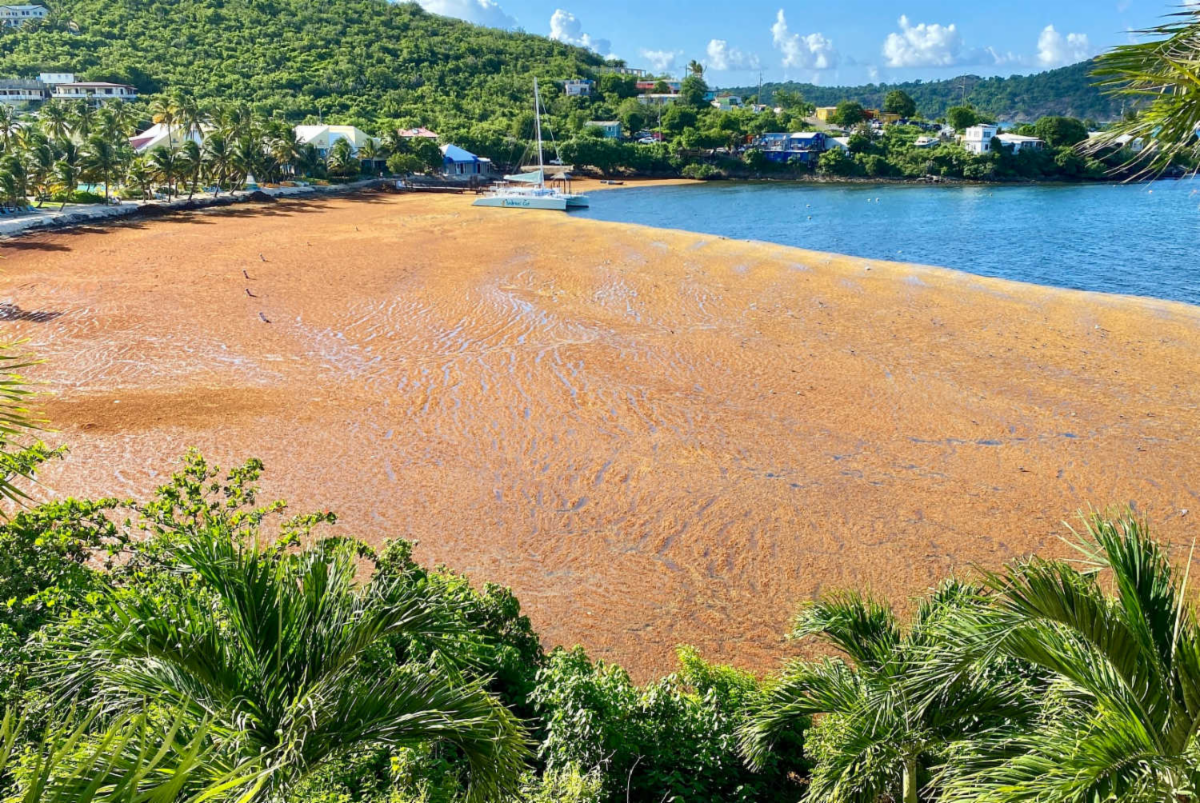
| A recently published article quantifies the economic damage caused by recurring sargassum seaweed events across the coasts of Puerto Rico, the U.S. Virgin Islands (USVI), and coastal Florida. NCCOS’ Competitive Research Program-funded research is timely: although the ecological and public health impacts of sargassum inundation events (SIEs) are well documented, the direct financial toll on state and local governments, and the private sector has not been thoroughly quantified for these key U.S. territories and states. The research examined both the direct and indirect costs of these events, especially their impacts on coastal tourism, recreation, and fisheries—three key economic sectors for the affected jurisdictions. To capture the economic impacts, the study used several methods for these regions, including compiling national income data for marine and coastal industries, estimating the frequencies of SIEs, analyzing tourism revenue losses such as hotel cancellations and reduced visitor spending, and assessing declines in commercial and recreational fishing catches. The study found that the surge in sargassum events are expected to cause millions of dollars in economic loss across the nine regions, potentially reaching up to billions of dollars along Florida’s Atlantic coast. Read more here. |
|
Trump Administration Suspends 5 Offshore Wind Projects off the East Coast |
|
| The Trump administration on Monday suspended leases for five large-scale offshore wind projects under construction along the East Coast. It comes two weeks after a federal judge struck down President Donald Trump’s executive order blocking wind energy projects, calling it unlawful. The administration said the pause will give the Interior Department, which oversees offshore wind, time to work with the Defense Department and other agencies to assess the possible ways to mitigate any security risks posed by the projects. It did not specify an end date. The administration said leases are paused for the Vineyard Wind project under construction in Massachusetts, Revolution Wind in Rhode Island and Connecticut, Coastal Virginia Offshore Wind, and two projects in New York: Sunrise Wind and Empire Wind. Read more here. |
|
| In the States and Territories |
|
| North Carolina Division of Coastal Management Evaluates Resilient Coastal Communities Program The North Carolina Division of Coastal Management recently worked with UNC-Chapel Hill on an external evaluation to identify ways the Resilient Coastal Communities Program (RCCP) can better support local governments from resilience planning to project implementation. Interviews with communities, contractors, and program partners highlighted key priorities: integrating future climate conditions early, standardizing risk and vulnerability analyses, strengthening coordination across agencies and funding programs, and addressing capacity and permitting challenges sooner, especially for smaller communities. The Division of Coastal Management is using these findings to refine planning guidance, focus technical assistance through Community Action Teams, and incorporate lessons learned into future funding cycles. For state and local governments working on resilience, this experience shows how evaluation can guide program improvements, improve coordination, and accelerate on-the-ground resilience projects. The full evaluation can be found here. Rhode Island – Middletown Coastal Access Alliance Signs Memorandum with CRMC The Middletown Coastal Access Alliance announced at a Dec. 9 meeting that it will officially steward six public rights-of-way in Middletown through an agreement with the state Coastal Resources Management Council. The meeting also included a presentation about a climate and coastal resilience collaboration involving the three Aquidneck Island municipalities and Naval Station Newport. The CRMC memorandum recognizes that the Middletown alliance has officially “adopted” the rights-of-way. It assigns the organization with monthly monitoring, regular clean-ups and two reports per year. CRMC is the program administrator and the town of Middletown will be responsible for signage and maintenance. “The town has been really great and supportive,” said MCAA board chair Melissa Welch. “The DPW does a great job trimming the rights-of-way and they always come collect the trash after our beach clean-ups.” Read more here. |
| Texas – GLO Announces Coastal Management Program’s Purchase of Beach Wheelchairs and Mobility Mats for Cameron County Texas Land Commissioner Dawn Buckingham, M.D., is proud to announce that the Texas General Land Office’s Coastal Management Program (CMP) recently purchased five 50-foot mobility mats and eight beach wheelchairs for placement at Cameron County area beaches and access points. This purchase, made possible through surplus CMP funding, will help ensure all Texans have access to the high tide line in areas where vehicles are prohibited. “Ensuring that our beaches are accessible to everyone is a priority for Cameron County. The donation of beach Mobi-chairs and Mobi-Mats significantly enhances our ability to welcome residents and visitors of all abilities. We are deeply grateful to Texas General Land Office Commissioner Buckingham and the CMP Program for this contribution, which will help create a more inclusive and enjoyable coastline for our beach visitors,” stated Cameron County Judge Eddie Treviño, Jr. Read more here. Alabama Receives More than $13 Million from NFWF for Coastal Restoration Projects Alabama has been awarded more than $13 million from the National Fish and Wildlife Foundation’s (NFWF) Gulf Environmental Benefit Fund for two major conservation projects on the state’s Gulf coast. These projects continue efforts to restore and protect natural resources affected by the 2010 Deepwater Horizon oil spill. The first project will restore the rapidly eroding shoreline of Little Dauphin Island, protecting approximately 850 acres of conservation land within the Little Dauphin Island Unit of the Bon Secour National Wildlife Refuge. This project also supports water quality improvements in Dauphin Island Bay. The second is an amended project that allows for the construction of additional breakwaters and restoration of up to 30 acres of marsh habitat at Salt Aire on the western shore of Mobile Bay. Read more here. |
| CMP Releases Coastal Resilience Guide for Illinois North Shore Communities The Illinois Coastal Management Program (CMP) is excited to announce the release of the Coastal Resilience Guide for Illinois North Shore Communities. Developed in partnership with the Great Lakes and St. Lawrence Cities Initiative, the guide equips local governments and residents with resources to better understand, plan for, and address the unique hazards facing the Illinois North Shore. The guide is accompanied by a new planning tool called the Illinois Shoreline Resource Explorer (I-SHORE), a data and resource hub for coastal planning. Stay tuned for webinars and workshops on the guide and I-SHORE in 2026! Learn more here. Indiana – IDNR Collecting Discarded Christmas Trees for Fish Habitat Illinois Department of Natural Resources (IDNR) fisheries biologists are collecting live Christmas trees to be used as fish habitat in local lakes after the holidays. The collected trees will be bundled together, weighted, and submerged at lakes, providing critical habitat for multiple fish species and promoting algae growth for insects that attract fish for anglers. The trees will naturally decompose over time. Maps and coordinates of the tree habitat locations are available online or from each lake’s biologist. Read more here. |
| Giant Clams Thrive with Indigenous Management in American Samoa A new study led by researchers at UH Mānoa Hawaiʻi Institute of Marine Biology (HIMB) ToBo Lab has revealed that giant clam populations in American Sāmoa are far more stable and abundant than previously thought, demonstrating the effectiveness of traditional, community-based resource management. The research, published in the journal PeerJ, analyzed multi-decadal survey data and found that marine areas managed by local villages consistently support higher clam densities and larger clam sizes compared to federally designated no-take reserves. “Many expected that giant clam populations would be in sharp decline, especially near populated islands,” shared Paolo Marra-Biggs, lead author of the study and a Ph.D. student at HIMB. “Instead, we found that clam abundances have remained relatively stable over the past 30 years, and in some areas have maintained high abundances. The biggest surprise was that village-managed closures outperformed federally protected no-take areas, highlighting the efficacy of cultural stewardship.” The success of this study hinged on critical Pacific-to-Pacific collaboration with partners like the American Sāmoa Department of Marine and Wildlife Resources, the National Park, and the National Marine Sanctuary of American Sāmoa. Read more here. California – Prairie Creek Floodplain Restoration at O’Rew Marks Beginning of New Chapter In early December, construction equipment was officially removed from the Prairie Creek Floodplain Restoration Project site at ‘O Rew. After five years of construction and more than a decade of planning, this milestone marks the completion of work on a 125-acre ecologically and culturally important property on California’s North Coast. Located just 3.5 miles from the ocean in Humboldt County, this project marks the final downstream opportunity to restore floodplain rearing habitat for salmon and steelhead in the Redwood Creek watershed. Restoration projects like this one are not about habitat alone. It’s about reconnection – of floodplains and creeks and of people and place. Over the past decade, CalTrout, the Yurok Tribe, Save the Redwoods League, and a team of dedicated local, state, and federal partners have worked side by side to transform this former mill site into thriving wetland and off-channel habitat that supports young salmon and steelhead as they prepare for their journey to the ocean, and welcomes them home to the Redwood Creek watershed to spawn. Thank you to the project funders that made all of this possible: Save the Redwoods League, California State Coastal Conservancy, National Oceanic and Atmospheric Administration, Wildlife Conservation Board, USFWS Coastal Program, National Coastal Wetlands Conservation Program, Ocean Protection Council; with state grants funding from Prop 1 and Prop 68. Read more here. |
| January 13, 2026 January 21-22, 2026 January 22, 2026 February 2, 2026 May 31-June 4, 2026 NOAA Science Seminar Series NOAA Digital Coast Training Calendar Silver Jackets Webinars |
| [NEW] National Shoreline Management Study – Pacific Islands and Commonwealth Regional Assessment Our U.S. Army Corps of Engineers (USACE) National Shoreline Management Study (NSMS) team is pleased to announce that the final NSMS U.S. Pacific Islands Regional Assessment report is available to download. The NSMS regional assessments represent a USACE-led collaborative effort, highlighting the physical, economic, environmental, social, and cultural impacts of shoreline change that result from natural and human-induced influences on coastal processes across every coastal region of the United States. NSMS reports provide national and local government policymakers, coastal scientists and engineers, academia, indigenous peoples, Tribal nations and representative groups, and other coastal interests and decision-makers key findings and recommendations regarding erosion and accretion and their causes. Learn more here. [NEW] Boat US Foundation – Capturing Abandoned and Derelict Vessels across the US, Freely Associated States, and US Territories The BoatUS Foundation for Boating Safety and Clean Water has developed this reporting database to identify and track Abandoned and Derelict Vessels (ADVs) in the United States, Freely Associated States and U.S. Territories. BoatUS Foundation is collecting information, through individual reports, to understand the scope of the problem of ADVs and track prevention and removal efforts by states and partners. ADVs pose navigation, safety, and pollution hazards to the communities where they are located. With your help, we can understand this issue better and work together towards solutions that prevent future ADVs. This project was made possible and supported by the National Oceanic and Atmospheric Administration Marine Debris Program. Learn more here. [NEW] Funding Opportunity: Climate Smart Communities Initiative CSCI awards provide funding and technical assistance to advance community-based climate resilience in US communities or regions that are highly vulnerable to the impacts of climate change. The total grants budget is $1.5-2 million, and grants typically range from $75,000 to $115,000 based on the scope of work proposed in the application. CSCI anticipates awarding between 16-20 grants for the 2026 cycle. The program prioritizes funding for communities that include historically disinvested populations at increased risk to climate-related impacts. It is open to US-based project teams composed of a climate adaptation practitioner and representatives from a local or regional government entity and a community-based organization. The application deadline is March 12, 2026. Learn more here. Great Lakes Climate Adaptation Resource Guide For hundreds of small and medium-sized communities across the Great Lakes region, preparing for the water-related impacts of changing weather patterns can be challenging. The International Joint Commission’s (IJC) Great Lakes Water Quality Board has developed a new Great Lakes Climate Adaptation Resource Guide. The guide highlights tools and approaches (including the CALM community of practice!) to help communities integrate Great Lakes water topics into their climate adaptation and resilience strategies. For additional information, read the one-pager or view the informational webinar. Read the full guide here. Coastal Southeast Technical Assistance Application For those that haven’t heard, the Coastal Stormwater Center of the Southeast (CSC) is one of four EPA-funded Stormwater Centers of Excellence across the U.S. The Center for Watershed Protection is honored to lead the CSC alongside an incredible team of partners: University of Florida, East Carolina University, North Carolina Coastal Federation, Clemson University, Virginia Tech, University of Georgia, and Auburn University. Through the CSC, we’ll be offering technical assistance at no cost, to state, Tribal, and local governments and environmental non-profits tackling stormwater challenges across coastal VA, NC, SC, GA, FL, and AL. This is just one of the many initiatives we’ll be rolling out to support resilience and innovation across the region. Learn more here. Funding Opportunity: Great Lakes Restoration Community Grant Program The Great Lakes Restoration Community Grant Program (GLRCGP) application is now open! The program’s primary goal is to fund restoration projects in Great Lakes communities with environmental concerns in support of GLRI objectives and offer technical assistance and minimize administrative challenges associated with applying for and managing federal grant funds. Cities, states, Tribes and nonprofit organizations representing Great Lakes communities can apply directly to the Great Lakes Restoration Community Grant Program. The submission deadline for Letters of Intent is January 16, 2026. Learn more here. Funding Opportunity: $1.45 Billion in Supplemental Economic Funding Available for Disaster Recovery The United States Economic Development Administration has announced the Notice of Funding Opportunity (NOFO) for its Fiscal Year (FY) 2025 Disaster Supplemental Grant Program. This program makes approximately $1.45 billion available to areas that received major disaster declarations in the calendar years 2023 and 2024 for economic recovery activities. Funds can support both construction and non-construction projects. State and local governments, Native tribes, higher education institutions, public or private non-profit organizations that work with local government, economic development organizations, and public-private partnerships for public infrastructure are eligible. The EDA will fund up to 80% of the project with higher percentages available for severely distressed applications and Tribal organizations. Applications are accepted on a rolling basis until funds are spent for Readiness and Implementation path projects, while Industry Transformation grants will be due March 3, 2026. For more information, contact Rania Campbell-Bussiere. |
|
| The views expressed in articles referenced here are those of the authors and do not represent or reflect the views of CSO. If you have a news item or job posting to include in future CSO Newsletters, please send an email to: ecrocco@coastalstates.org with a subject line: “Newsletter Content”. Please include the information to be considered in the body of the email. Please note: CSO reserves final decision regarding published newsletter content and may not use all information submitted. |
|
| Coastal States Organization | 50 F Street. NW, Suite 570, Washington, DC 20001 | 202-800-0580 | cso@coastalstates.org | www.coastalstates.org |
|
|
|
|