The Coastal States Organization represents the nation’s Coastal States, Territories, and Commonwealths on ocean, coastal, and Great Lakes resource issues. Having trouble opening links? View this on our website: https://coastalstates.org/resources/ |
|
CSO Hosts Member Meeting in Washington, DC |
|
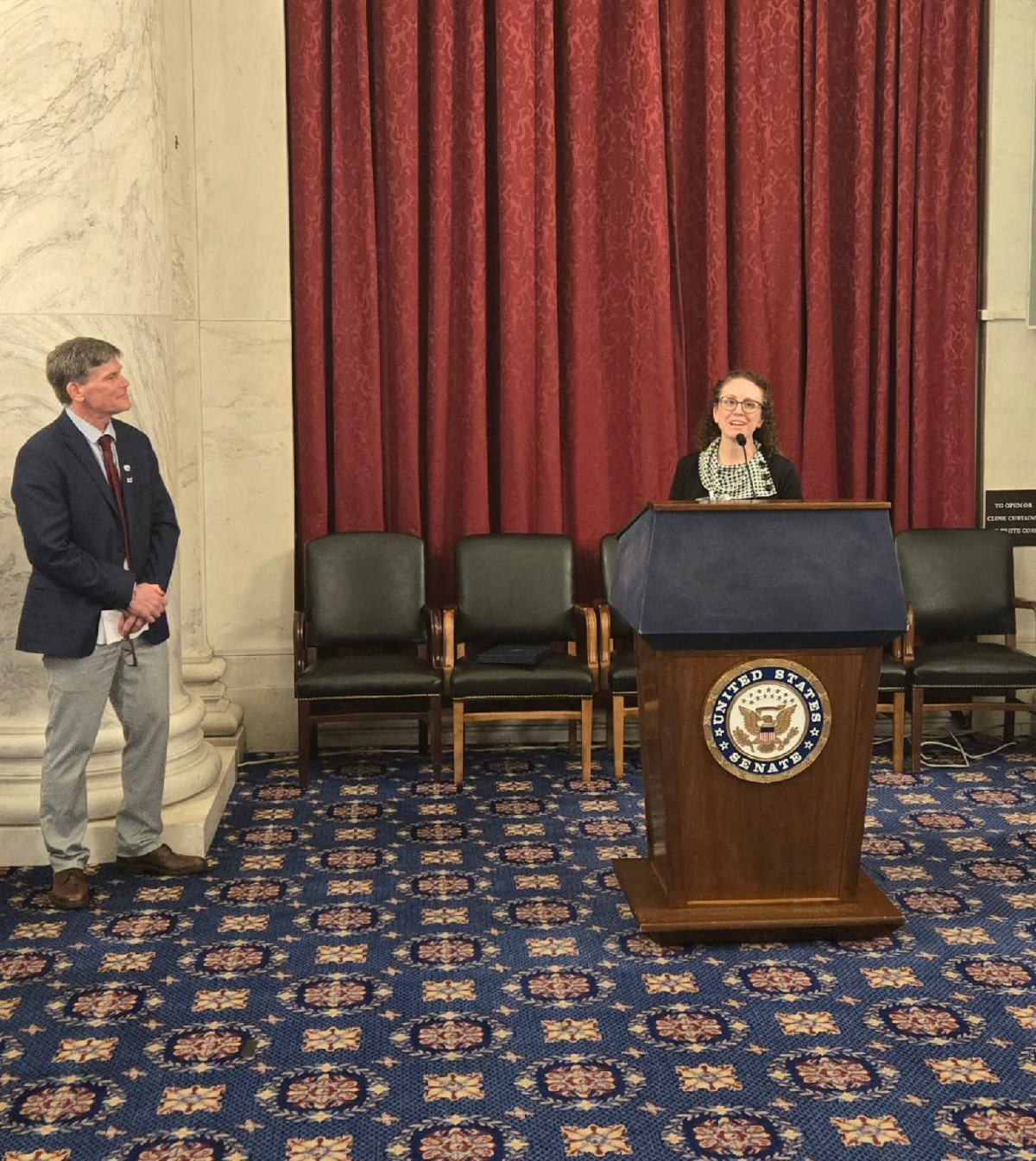
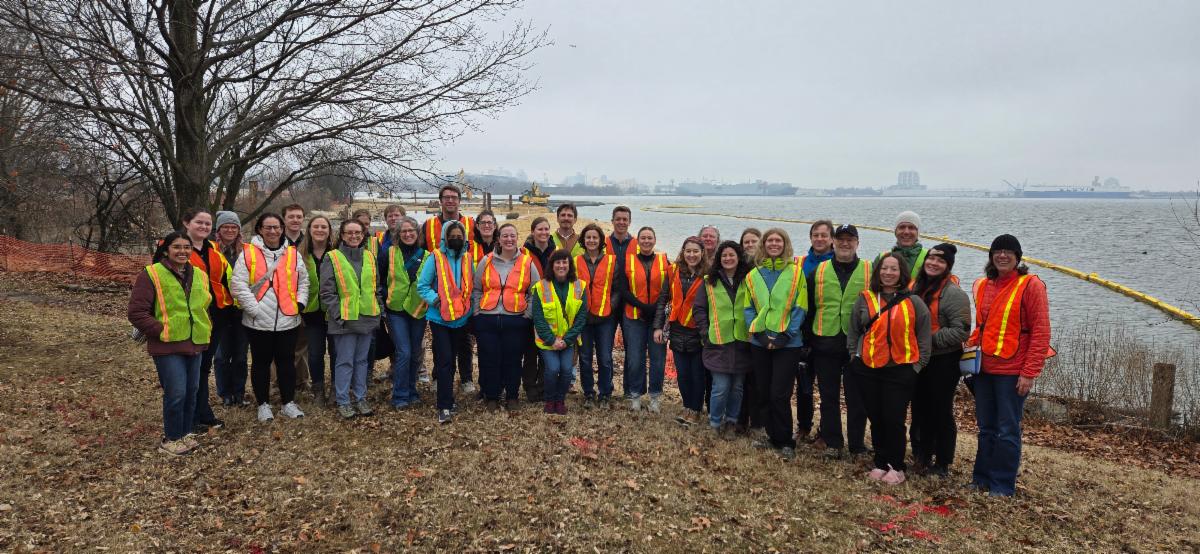
| Last week, the Coastal States Organization held its 2026 Winter Member Meeting in Washington, DC. The meeting brought together 36 Coastal Zone Management Programs from 29 states and 4 U.S. territories. Throughout the week, members participated in discussions on topics such as CZMA reauthorization, offshore continental shelf resources, and community relocation. Members had the opportunity to speak with staff from the Senate Appropriations Committee and Commerce Committee, as well as representatives from NOAA and BOEM. On Thursday, CZMPs participated in regional breakouts with Sea Grant and National Estuarine Research Reserve programs. To finish off the week, Maryland’s Department of Natural Resources led a field trip to Baltimore, where CSO staff and members learned about efforts to rebuild the Key Bridge and restore marshes in the area. CSO thanks its members, speakers, and partners for a very successful meeting! Learn more about Coastal Zone Management Programs here. |
|
| In the States and Territories |
|
| Massachusetts – CZM Awards $835,000 in Grants to Improve Water Quality and Habitat for Buzzards Bay The Healey-Driscoll Administration announced $834,861 in grants for projects that will protect and restore habitat in the Buzzards Bay watershed. The five grants are awarded by the Buzzards Bay National Estuary Program (NEP) through the Massachusetts Office of Coastal Zone Management (CZM), with funding from the U.S. Environmental Protection Agency (EPA) under the Infrastructure Investment and Jobs Act of 2021. The grants also leverage more than $2.7 million in local and state funds and in-kind services and help meet Massachusetts climate resilience and environmental quality goals. “We are committed to protecting coastal water quality and habitat and continuing to bring in dollars to Massachusetts to support this important environmental work,” said Coastal Zone Management Director and Interim Director of the Buzzards Bay NEP Alison Brizius. “This is a tremendous effort that brings together communities that promote a thriving Buzzards Bay.” Read more here. Connecticut – Major Restoration and Improvements Planned for Bluff Point The UConn-led Connecticut National Estuarine Research Reserve (CTNERR), in cooperation with the Connecticut Department of Energy and Environmental Protection (DEEP), is planning major restoration and improvements at Bluff Point State Park. The project is being facilitated by $2.87 million in federal funding provided by the National Oceanic and Atmospheric Administration (NOAA) Habitat Protection and Restoration program. The endeavor seeks to restore critical salt marsh habitat and improve public access at Bluff Point State Park, Coastal Reserve, and Natural Area Preserve in Groton. Over the next three years, the project will replace two aging culverts beneath the park’s main hiking trail with elevated boardwalks. It will improve both ecological function and visitor access at one of the largest undeveloped coastal properties between New York and Cape Cod. Notably, the project will restore and protect tidal flow to three high-value coastal marshes totaling approximately 1,850 square meters. Read more here. |
| Texas – GLO Awards More than $84 Million for Projects Across 14 Texas Coastal Communities Texas Land Commissioner Dawn Buckingham, M.D. announced the Texas General Land Office (GLO) has awarded 14 coastal counties with approximately $84.6 million for improvement projects through its Coastal Management Program (CMP) Grant Cycle 31 and Coastal Erosion Planning and Response Act (CEPRA) program Cycle 14. CMP projects receive grant money from the National Oceanic and Atmospheric Administration (NOAA) and Gulf of Mexico Energy Security Act (GOMESA) funding along with a partner match. These projects include work that ranges from preserving coastal habitat through land acquisition, restoring habitat through invasive species removal, improving coastal water quality management, and increasing beach access opportunities for the public. CEPRA projects are focused on addressing coastal erosion concerns, implementing work that supports erosion reduction including beach nourishment, dune restoration, shoreline stabilization, habitat restoration, and erosion investigations. Read more here. An Unexpected Ally, Black Mangroves, Could Slow Louisiana Marsh Erosion Black mangroves are the new kids on the block in Louisiana’s coastal ecosystems, as warming winters allow them to move farther up into the delta. But even though they’re new here, they may already be pulling their weight by helping prevent edge erosion, says a new study from LSU Oceanography & Coastal Sciences researcher Mike Rabalais. Edge erosion occurs when strong waves, such as those during a hurricane, wash away plants and soil at the edge of a marsh. This is a major issue —it causes up to 50% of all coastal erosion. Rabalais’ work shows black mangroves can reduce edge erosion by about 40 to 60 percent. Black mangroves have other benefits as well. Rabalais says they store more carbon than other coastal plants and, on barrier islands, are providing rookery habitats for brown pelicans. Read more here. |
| Habitat Restoration in the Great Lakes: By the Numbers NOAA and partner organizations work through the Great Lakes Restoration Initiative to restore habitat in areas that have experienced environmental degradation, known as Areas of Concern, and priority habitat for Great Lakes fisheries. NOAA has supported 102 high-priority habitat restoration projects through the Great Lakes Restoration Initiative. The projects have restored more than 5,400 acres of habitat and reopened more than 570 miles of rivers and streams for fish and wildlife. This restoration work has improved fish passage, cleaned up debris, restored coastal wetlands, and managed invasive species. Habitat restoration work in the Great Lakes has helped improve conditions in 18 Great Lakes Areas of Concern. These are areas where a waterway’s poor conditions are affecting the environment, human health, and the local economy. Read more here. Can Dredged Sediments Benefit Crops and Mitigate Algal Blooms? New research from the Harmful Algal Bloom Research Initiative is helping farms become part of the solution to mitigate algal blooms on Lake Erie by putting excess sediment to use. Each year, the state of Ohio dredges approximately 1.5 million tons of sediments from its Lake Erie ports to keep federal navigation channels clear for ships. This dredged material is made up of loose sand, clay, silt, and gravel from the bottom of water bodies. The majority of dredging on the lake occurs at the Port of Toledo, which has particularly high sedimentation. In past decades, harbors would dispose of their dredged material by dumping it in the open lake. In 2020, however, Ohio banned open water disposal of dredged sediments in an effort to improve water quality and reduce annual algal blooms. Currently, dredged sediments from Toledo Harbor are stored in a confined facility — with a limited capacity of 10 years — and the state is looking for beneficial uses for this material. In response to this need, a team of researchers led by Dr. Angelica Vazquez-Ortega of Bowling Green State University and funded by HABRI investigated the viability of using dredged material as an agricultural farm soil amendment. Results showed that amending farm soil with dredged materials improved the soil’s chemical health — such as an increase in soil organic matter and available phosphate to help plants grow. Read more here. |
| $4.6 Million Project to Restore Coral Reef in American Samoa A new $4.6–million multi-institute collaborative project to help grow coral restoration capacity in American Samoa will begin in early 2026, leveraging more than two decades of coral heat tolerance studies to inform a restoration with resilience approach. The project will bring together partners from American Samoa Community College, University of Hawaiʻi Sea Grant College Program, American Samoa Department of Marine and Wildlife Resources, UH Mānoa, and Old Dominion University with local agencies and village leaders to focus on restoring healthy coral reefs and training the next generation of natural resource managers. American Samoa has some of the healthiest coral reefs within inhabited U.S. waters that are exceptionally heat tolerant, as well as the world’s oldest continuously monitored coral reef transect, making it an excellent coral reef study site. American Samoa also has the highest rate of relative sea-level rise recorded within the NOAA global tide gauge network. Since the fringing reef crests (the shallow part of the reef where the waves break) remove up to 97% of wave energy before reaching the shore, maintaining healthy reefs is key to protecting the land. Coral restoration, where corals are grown and outplanted onto the reef, is one method of helping reefs recover from impacts such as storms and ship groundings. Read more here. California – Celebrating 50 Years of Coastal Protection Through the 1950s and 1960s, California’s population was booming, as was offshore oil drilling and other industrial and commercial development along the coast that threatened community health, public access, wetlands and other sensitive habitats. In response, the voters of California passed Proposition 20 in 1972, a landmark citizen initiative to provide for sustainable coastal development while protecting the natural environment and public access along the coast. Then in 1976, California reaffirmed its commitment to preserving its coastal resources by passing the Coastal Conservancy Act and the California Coastal Act. These landmark laws created the State Coastal Conservancy and the California Coastal Commission. The Coastal Commission, in coordination with local governments, plans for and regulates development in the Coastal Zone. That includes everything from hotels to resiliency plans to large commercial events and offshore wind development. The Coastal Conservancy works with partners to develop and fund projects that protect and restore coastal resources, expand public access, conserve open space, and address climate change impacts. In these 50 years, the programs have formed over 1,000 partnerships, conserved over 500,000 acres, and invested more than $2 billion in coastal conservation, restoration, and climate resilience. Read more here. |
| [NEW] Tidal Wetland Mitigation Pathway Protection Guide Now Available! The Pathways to Resilience: A Guide to Collaborative Tidal Wetland Migration Pathway Protection is live at nerra.org. This project was funded by NFWF. The guide is designed to help communities protect tidal wetlands as sea levels rise. Developed through a six-state initiative along the Eastern Seaboard, the guide provides tools, case studies, and strategies for identifying inland migration pathways and working with partners to safeguard these ecosystems. By supporting wetlands—which provide major storm protection and sustain fisheries—the guide aims to help coastal communities strengthen resilience and protect local economies. Learn more here. [NEW] Ocean Biodiversity Request for Proposals Now Open Blue Convergence Fund is excited to announce an open Request for Proposals (RFP) as part of Blue Convergence Fund’s Ocean Biodiversity program. Blue Convergence Fund is a grantmaking non-profit dedicated to advancing ocean and coastal sustainability by turning knowledge into action through funding initiatives that are grounded in community needs. This RFP seeks engagement projects that unlock and mobilize ocean biodiversity knowledge for action and decision-making in three regions—Chesapeake Bay, Mobile Bay, and Puget Sound. Projects should prioritize relationship-building, knowledge exchange, synthesis, and translation that lead to products or processes that help communities work with decision-makers to improve management and policy. Proposals are due noon ET/11am CT/9am PT on Wednesday, April 15, 2026. The RFP document is available here. Report: Our Coasts, Resiliency, and Carbon Dioxide Removal: A Practitioner-Informed Roadmap for Enhancing Coastal Resilience and CDR Potential Along the U.S. Coastline This roadmap explores how coastal resilience infrastructure, living shorelines, ecosystem restoration, and stormwater systems can become platforms for both climate adaptation and carbon dioxide removal. It outlines where integrations are physically possible, how policy and permitting pathways can enable pilots, and what meaningful monitoring and community engagement must look like from the project start. As coastal communities face accelerating sea-level rise, erosion, and flooding, we believe investments in resilience can also advance mitigation, delivering adaptation that mitigates and mitigation that strengthens resilience. This work was made possible through the generous support of The Navigation Fund, and in close collaboration with the Carbon Removal Standards Initiative (CRSI). Read the full report here. 2026 National Coastal Resilience Fund RFP Now Open The National Fish and Wildlife Foundation (NFWF), in partnership with the National Oceanic and Atmospheric Administration (NOAA), Occidental, and Shell is now soliciting Pre-Proposals for the 2026 National Coastal Resilience Fund (NCRF). The Request for Proposals is available here. The National Coastal Resilience Fund will award grants for nature-based solutions that protect coastal communities while enhancing habitats for fish and wildlife. The National Coastal Resilience Fund invests in coastal resilience projects that restore, increase and strengthen natural infrastructure such as coastal marshes and wetlands, dune and beach systems, oyster and coral reefs, rivers and floodplains, coastal forest, and barrier islands that mitigate the impacts of storms and other coastal hazards to communities. Pre-proposals must be submitted through NFWF’s Easygrants system no later than March 31st, 2026 11:59 PM ET. Coastal Southeast Technical Assistance Application The Coastal Stormwater Center of the Southeast (CSC) is one of four EPA-funded Stormwater Centers of Excellence across the U.S. The Center for Watershed Protection is honored to lead the CSC alongside an incredible team of partners: University of Florida, East Carolina University, North Carolina Coastal Federation, Clemson University, Virginia Tech, University of Georgia, and Auburn University. Through the CSC, we’ll be offering technical assistance at no cost, to state, Tribal, and local governments and environmental non-profits tackling stormwater challenges across coastal VA, NC, SC, GA, FL, and AL. This is just one of the many initiatives we’ll be rolling out to support resilience and innovation across the region. Learn more here. |
|
| The views expressed in articles referenced here are those of the authors and do not represent or reflect the views of CSO. If you have a news item or job posting to include in future CSO Newsletters, please send an email to: ecrocco@coastalstates.org with a subject line: “Newsletter Content”. Please include the information to be considered in the body of the email. Please note: CSO reserves final decision regarding published newsletter content and may not use all information submitted. |
|
| Coastal States Organization | 50 F Street. NW, Suite 570, Washington, DC 20001 | 202-800-0580 | cso@coastalstates.org | www.coastalstates.org |
|
|
|
|