The Coastal States Organization represents the nation’s Coastal States, Territories, and Commonwealths on ocean, coastal, and Great Lakes resource issues. Having trouble opening links? View this on our website: https://coastalstates.org/resources/ |
|
Celebrating National Estuaries WeekSeptember 20-27 |
|
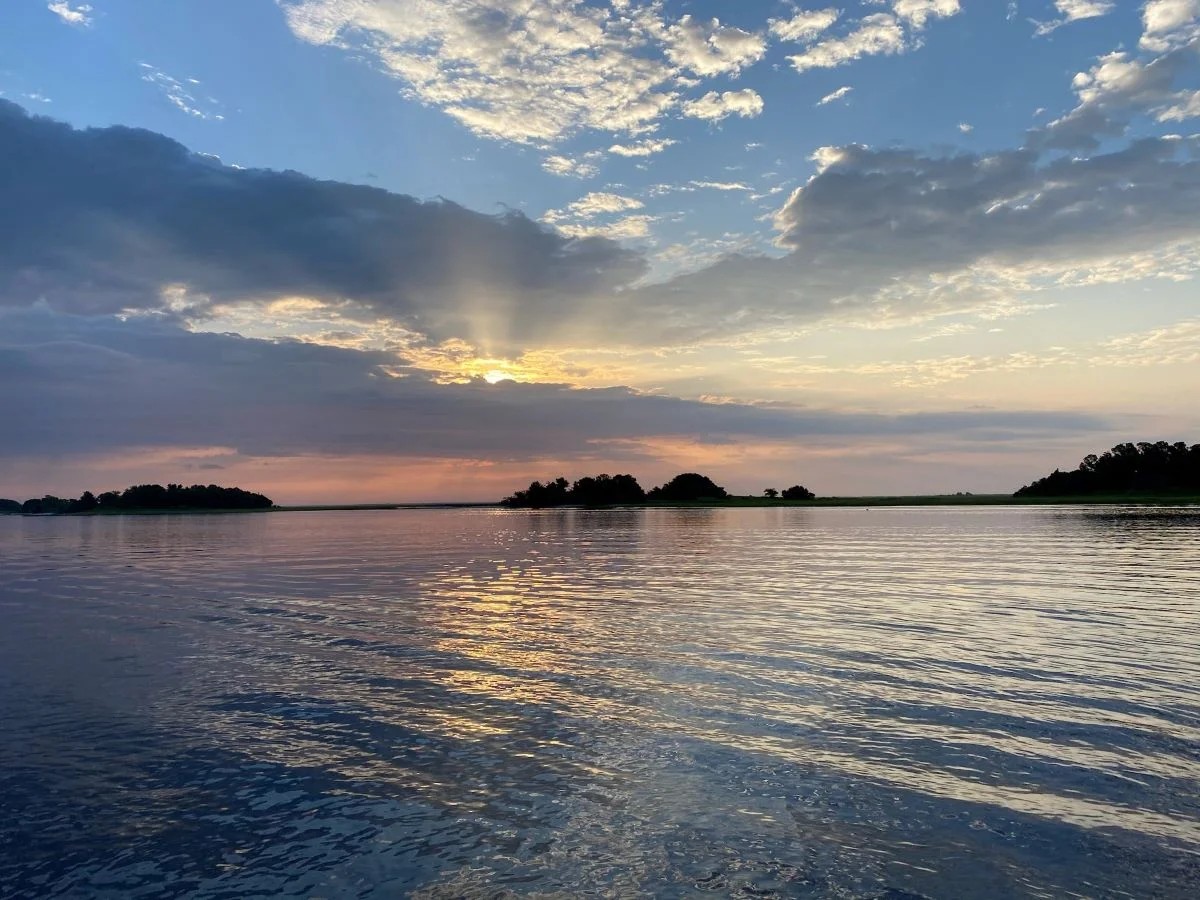
Source: Elizabeth Pinnix, NC Coastal Reserve |
|
| Every September, the Coastal States Organization (CSO) joins with the National Estuarine Research Reserve Association (NERRA), Restore America’s Estuaries (RAE), the Association of National Estuary Programs (ANEP), NOAA’s Office for Coastal Management (NOAA OCM), the Ocean Conservancy, and others to celebrate National Estuaries Week (NEW). National Estuaries Week will be observed this year from September 20 to 27. An estuary is a partially enclosed coastal water body where freshwater from rivers and streams mixes with salt water from the ocean. Estuaries, and their surrounding lands, are places of transition from land to sea. Although influenced by the tides, they are protected from the full force of ocean waves, winds, and storms by land forms such as barrier islands or peninsulas. Estuaries have many benefits, including flood protection, habitats for a variety of species, and economic boosts from fishing and tourism. National Estuaries Day began in 1988 to promote the importance of estuaries and the need to protect them. Each year, this week is a celebration of these incredible ecosystems and the benefits estuaries provide. We encourage you to get out and wade into an estuary near you and enjoy these benefits for yourself! The 30 national estuarine research reserves are yours to explore. Get outside and go hiking, biking, kayaking, or birding, or find another activity, to see what lies within the waters or trails. Learn more about National Estuaries Week here. |
|
| In the States and Territories |
|
| Maryland – New DNR Tool Helps Direct Better Marsh Restoration and Protection The Maryland Department of Natural Resources released a new decision-making tool to help land managers and conservation organizations target restoration and protection of marshes in the state. The new Marsh Resilience Portfolio is a feature on the department’s Maryland Coastal Atlas mapping tool that provides data on marsh areas. The portfolio lays out information about a marsh’s health as well as its benefits for protecting habitats and communities. With more than 282,000 acres of Chesapeake Bay tidal wetlands, land managers must make hard decisions about where to dedicate resources. The Marsh Resilience Portfolio will help land managers enhance the lifespan of marshes and focus on marshes that will provide coastal protection benefits in the face of a changing climate. The Marsh Resilience Portfolio, funded through Maryland’s Coastal Zone Management Program, replaces the Marsh Protection Potential Index, previously released in 2016. This new dataset integrates more quantitative data into state targeting by incorporating spatial datasets from US Geological Survey and wave attenuation data from a NOAA-funded Effects of Sea Level Rise project. Read more here. North Carolina – State Invites Communities to Apply for Phases 3 and 4 of the N.C. Resilient Coastal Communities Program The NC Department of Environmental Quality’s Division of Coastal Management (DCM) is accepting applications for approximately $2.5 million in funding through Phases 3 and 4 of the N.C. Resilient Coastal Communities Program (RCCP) to help coastal communities design and implement projects that strengthen local resilience to coastal hazards. The RCCP was established to help North Carolina’s coastal communities address flooding, storms and other coastal hazards through a locally driven process. The program offers participating communities technical assistance and funding to identify vulnerabilities, develop resilience strategies and advance projects that address local priorities. Over the past five years, the RCCP has supported communities across the North Carolina coast, helping 60 communities complete resilience strategies and awarding 91 grants totaling $16.3 million. The investments help communities better understand their vulnerabilities, strengthen resilience and prepare for future coastal hazards. Read more here. |
| Mobile Baykeeper Relaunches Coastal Alabama Water Testing Program After a five-month pause, Mobile Baykeeper announced Friday that its Swim Where It’s Monitored, or SWIM, water quality monitoring program is relaunching as the CrowderGulf SWIM program. Beginning September 11, trained community volunteers will collect water samples from public swimming and recreational areas across coastal Alabama. The samples will be analyzed in Mobile Baykeeper’s lab, with swim season test results published every Friday through September and monthly for the remainder of the year. SWIM testing began in 2017 and was paused by Mobile Baykeeper in April because of a funding shortfall. The initiative operated 20 bacteria testing sites at swimming locations on Mobile Bay and the Gulf Coast in Baldwin and Mobile counties. Read more here. NOAA Names Mississippi State University to Host New Northern Gulf Research Insistute NOAA has selected Mississippi State University to host NOAA’s Cooperative Institute in the Gulf of America (CINGA). The mission of this cooperative institute is to promote collaborative research with NOAA to build a comprehensive understanding of Gulf ecosystems, along with the social and economic forces that define the region. The selection comes with an award of up to $100 million over the course of five years, with the potential for a five-year renewal based on successful performance. NOAA selected Mississippi State University, which is located in Starkville, Mississippi, after an open, competitive evaluation. CINGA will be affiliated with NOAA’s Atlantic Oceanographic and Meteorological Laboratory in Miami, Florida. The regional consortium will include affiliated faculty and staff at nine institutions to leverage their specialized capabilities. Partner institutions include Texas A&M University, Louisiana State University, the University of Southern Mississippi, Jackson State University, Florida A&M University, the Dauphin Island Sea Lab, Florida State University, and the University of Alabama–Huntsville. By integrating research and technology, CINGA aims to improve natural resource management, enhance coastal resilience and support data-driven decision-making for local, regional and national communities. Read more here. |
| Wisconsin – Governor Evers Declares September Coastal Awareness Month Governor Tony Evers has proclaimed September as Coastal Awareness Month in Wisconsin in recognition of the important impact that the Great Lakes have on the state. Lake Michigan and Lake Superior are integral to Wisconsin’s economy, recreation, tourism, cultural history, and quality of life. The Governor’s proclamation is a reminder for the people of Wisconsin to protect, promote, and enjoy the state’s Great Lakes. In recognition of Coastal Awareness Month and the importance of the Great Lakes, the Wisconsin Coastal Management Program (WCMP) at the Wisconsin Department of Administration (DOA) is proud to announce the release of the 2026 Wisconsin Great Lakes Chronicle. The Chronicle promotes public awareness of Wisconsin Great Lakes issues, provides a vehicle for experts to educate public policy leaders, and creates an historical record of Great Lakes events and perspectives. The 2026 edition features articles on the history of the Chronicle, Resiliency in the East River, Ishkode (Good Fire) on Wisconsin Point, and Great Lakes collaboration. The 2026 Wisconsin Great Lakes Chronicle, including past issues, is available on the WCMP website. Encroaching Carp Threaten Great Lakes Ecosystem For decades, four species of invasive carp have been working their way toward the Great Lakes. On their way, they’ve left a trail of decimated native fish populations and injured boaters. What started as a faraway threat, slowly creeping up the Mississippi River, is now demanding urgent attention. Just last weekend, monitoring crews with the Illinois Department of Natural Resources found hundreds of young silver carp in the Marseilles Pool, just 80 miles away from Lake Michigan. If the carp make it into Lake Michigan, they’ll likely find wide open waters, diverse habitats to fill, plenty of food and a conspicuous lack of natural predators. Read more here. |
| California – Coastal Commission Resolves Illegal Excavation in Malibu and Secures Restoration, $2M Beachfront Property for Public Use The California Coastal Commission voted unanimously on Thursday to approve a settlement that requires a private company to restore a damaged Malibu shoreline and dedicate for public use a $2-million beachfront property. The agreement resolves the illegal use of heavy machinery by 2XMD Partners LLC to dig up sensitive coastal habitat along Broad Beach. The settlement also requires the company to remove an unpermitted private staircase and rock wall that blocked public access along the coast. “This is a rare opportunity to secure beach access for the public in Malibu,” said Coastal Commission Executive Director Kate Huckelbridge. “I’m grateful to all involved for turning a bad situation into a major win for Californians.” Read more here. Siletz Bay Restoration Reaches Major Milestone in Oregon Coastal Recovery Along U.S. Highway 101 just south of Lincoln City, 45 days of heavy construction have reshaped 37 acres of Siletz Bay National Wildlife Refuge, where excavators have carved winding tidal channels across former agricultural ground, filled old drainage ditches, removed invasive vegetation and positioned large trees and root systems throughout a reconstructed floodplain. The roughly $1.5 million project has now reached a major construction milestone as another portion of Lower Drift Creek is reconnected with tidal processes that were disrupted by generations of diking, drainage and agricultural use. The work represents Phase II of the Lower Drift Creek tidal wetland restoration, an undertaking involving the MidCoast Watersheds Council, U.S. Fish and Wildlife Service and numerous state, federal, tribal and conservation partners. Planning began in 2018, and the project was designed to restore approximately 37 acres between Highway 101 and South Drift Creek Road while improving habitat for native fish and wildlife, rebuilding increasingly rare coastal wetlands and addressing how tidal water moves through the surrounding floodplain. Read more here. |
| BCDC Photo Contest BCDC’s inaugural photography contest is now open! Share your best photographs of the plants, wildlife, landscapes, and people that make San Francisco Bay and Suisun Marsh extraordinary! The contest is free and open to photographers of all experience levels. Submit up to five photos by October 14. Learn more about the contest categories and submit here. Great Lakes Photo Contest The Great Lakes Observing System (GLOS) invites submissions to their annual Great Lakes photo contest. As we close out summer, GLOS would love to see what’s happening around the basin. Get your gear, get out to the water, and send in your best photo from a day out somewhere in the Great Lakes watershed. Learn more here. WEDG Professionals Course – No/Reduced Cost Training Interest Form With generous support from the Walton Family Foundation, Waterfront Alliance is sharing access to its popular WEDG Professionals Course. Individuals working on environmental, flooding, or water-related issues in states along the Mississippi River are eligible for the free training. Individuals working at for-profit firms based in or working on environmental, flooding, or water-related projects in states along the Mississippi River. For-profit firms may take the course at a discounted rate of $300. The interest form can be found here. California Ocean & Coastal Amateur Photography Contest California is in many ways defined by its coast and ocean. This contest pays tribute to these special places, honors the diversity of wildlife they support, and celebrates access for all. Pictures can feature any of the following subjects: the scenic coast and Pacific Ocean off California, the people of the California Coast, and California ocean and coastal wildlife. Contest entry is free and open to all amateur photographers. Submissions are due by 5pm, September 30, 2026. For more information or questions about entries, contact Lauren.Dung@coastal.ca.gov. Learn more here. |
|
| The views expressed in articles referenced here are those of the authors and do not represent or reflect the views of CSO. If you have a news item or job posting to include in future CSO Newsletters, please send an email to: ecrocco@coastalstates.org with a subject line: “Newsletter Content”. Please include the information to be considered in the body of the email. Please note: CSO reserves final decision regarding published newsletter content and may not use all information submitted. |
|
| Coastal States Organization | 50 F Street. NW, Suite 570, Washington, DC 20001 | 202-800-0580 | cso@coastalstates.org | www.coastalstates.org |
|
|
|
|