The Coastal States Organization represents the nation’s Coastal States, Territories, and Commonwealths on ocean, coastal, and Great Lakes resource issues. Having trouble opening links? View this on our website: https://coastalstates.org/resources/ |
|
Coastal Communities Celebrate World Wetlands Day |
|
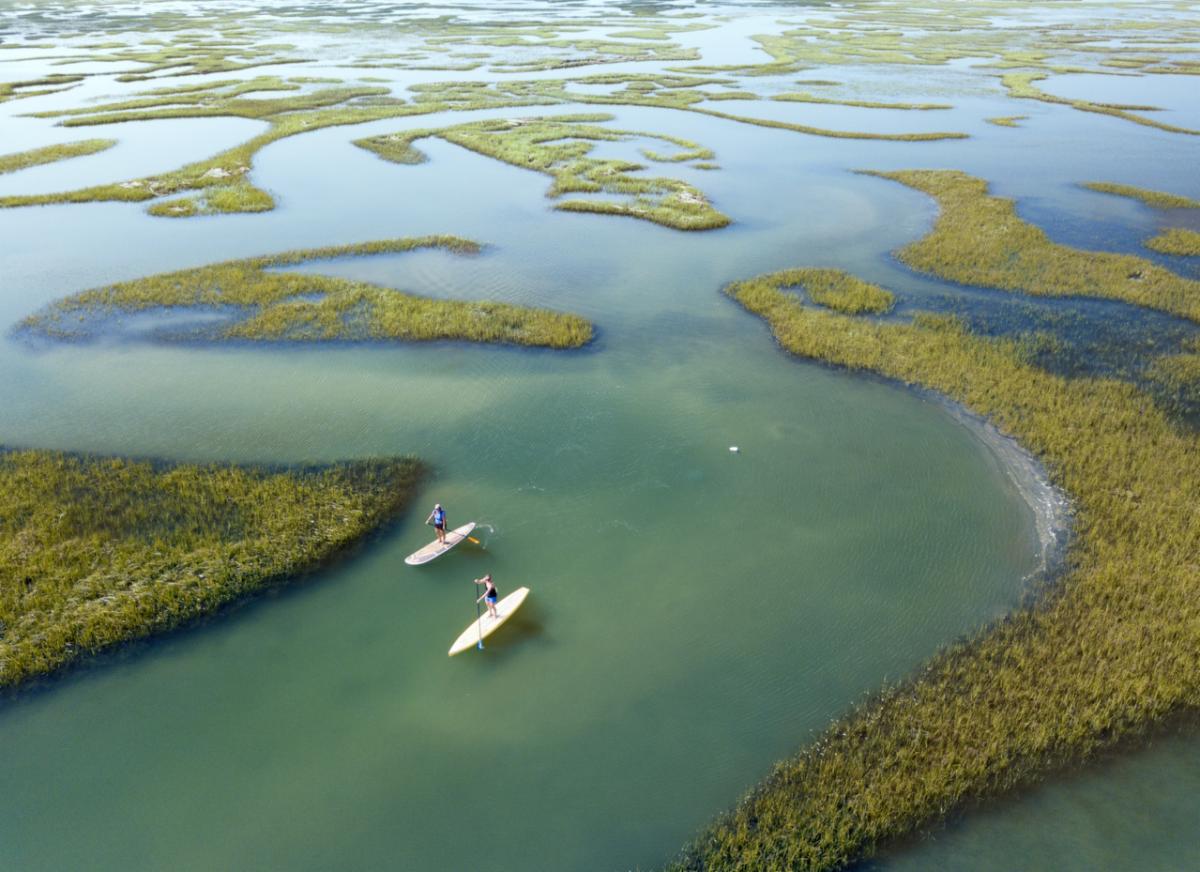
Source: Hank Carter, NOAA |
|
| In 2021, the UN General Assembly established February 2nd as World Wetlands Day, celebrating the anniversary of the adoption of the Convention on Wetlands in 1971. Wetlands provide substantial economic and ecological benefits to coastal communities. These ecosystems provide habitat for fish and wildlife, protect coastal towns from flooding, filter water, and bring tourism to communities across the United States. Many of these communities are hosting events to acknowledge these crucial ecosystems. In Charleston, South Carolina, the MARSH Project organized a group of 40 volunteers to pick up litter in the local marsh. This Saturday, the Hawai’i Audubon Society is hosting a tour to see wetland birds. UC San Diego holds an annual Love Your Wetlands Day, which includes science seminars, cultural activities, and clean-up efforts. Learn more here. |
|
| In the States and Territories |
|
| Maine Coastal Program Awarded Grant to Restore Eelgrass Maine Coastal Program, in partnership with University of Maine Darling Marine Center and Coastal Rivers Conservation Trust, was awarded $850,000 from the state’s in-lieu fee compensatory mitigation program to restore three acres of Zostera marina (eelgrass) in Great Salt Bay, Maine. Great Salt Bay has lost over 320 acres of eelgrass since 1994. The project will span 7 years and include large-scale seed harvest and redistribution as well as invasive Carcinus maenas (green crab) population control. Participatory science is a key component of the project, engaging adjacent property owners and the larger community in seed harvest, dispersal, and green crab trapping. This is only the second eelgrass restoration project funded by Maine’s compensatory mitigation program and the project location is one of the warmest historical eelgrass meadows in the state. Delaware – Shoreline-Monitoring Cameras Installed on Lewes Beaches Through the University of Delaware, the Delaware Geological Survey recently installed cameras facing the water at Savannah Beach and Johnnie Walker Beach in Lewes. The cameras are part of a pilot program to determine how wind, waves and weather effect the beaches. The results will determine how beach replenishment resources are allocated. The cameras snap a still photo every 30 minutes. No video is recorded. There are 10 cameras on beaches from Kent County to Cape Shores in Lewes, Cape Henlopen State Park and one at the Indian River Inlet. “It helps with our resiliency programs and understanding where our vulnerabilities are. If it works out like it’s supposed to, this will become the foundation of beach replenishment in the future,” Lewes Deputy Mayor Khalil Saliba said. Read more here. |
| Florida – Celebrating the Completion of the Picayune Strand Restoration Project The South Florida Water Management District (SFWMD), the U.S. Army Corps of Engineers (USACE) and the Florida Department of Environmental Protection along with many other federal, state and local officials, partners and stakeholders celebrated the completion of the Picayune Strand Restoration Project in Collier County. The Picayune Strand Restoration Project is a cornerstone of America’s most ambitious ecosystem restoration effort, the Comprehensive Everglades Restoration Plan (CERP). “Today we celebrated a significant step toward protecting Floridians from flood risk and restoring America’s Everglades. It is a great honor to be here as we mark the completion of the Picayune Strand Restoration Project, a cornerstone of the Comprehensive Everglades Restoration Plan,” said Adam Telle, Assistant Secretary of the Army for Civil Works. Spanning 55,000 acres between Alligator Alley and Tamiami Trail in Southwest Florida, this restoration project is the result of years of collaboration among USACE and the SFWMD, as well as many local, state, and federal partners. Through the removal of 260 miles of roads and plugging 48 miles of canals, the project has successfully restored the natural flow of water to the region, revitalizing wetlands and improving overall water quality. Read more here. Texas – Coastal Management Program Awards Funding to Armand Bayou Nature Center for Habitat Restoration Efforts Today, Texas Land Commissioner Dawn Buckingham, M.D., was pleased to present a check of $767,396 to the Armand Bayou Nature Center (ABNC). Awarded Cycle 31 funding from the Coastal Management Program and Gulf of Mexico Energy Security Act. The ABNC will use this critical capital to restore approximately 100 acres of endangered coastal habitat, mainly on the Taylor Bayou portion of the preserve, which has been overrun with invasive grassy and woody species. A 4,000-acre nonprofit nature preserve in Pasadena, Texas, the ABNC protects and manages three rapidly disappearing habitats that were once dominant along the Gulf Coast. This funding will help the ABNC kill off invasive species such as Vasey grass, tallow trees, persimmon, deep rooted sedge, trifoliate orange trees, McCartney rose, Baccharis, yaupon, and others. The invasive material will be cut and mulched, and volunteers will replant with native tall grasses and plants from ABNC’s onsite nursery. Read more here. |
| Wisconsin – Gov. Evers, WisDOT Announce over $7.5 Million to Strengthen Wisconsin’s Ports, Bolster Commerce Gov. Tony Evers, together with the Wisconsin Department of Transportation (WisDOT), today announced Harbor Assistance Program grants totaling over $7.5 million for harbor maintenance and construction projects in Green Bay, Manitowoc, Marinette, Milwaukee, and Sturgeon Bay. “As a state, we’ve made it a priority to help ensure our Great Lakes ports and harbors have the 21st-century infrastructure needed to support a 21st-century global economy, and we’re continuing that forward momentum with these grants that will benefit several of our coastal communities,” said Gov. Evers. “Coastal communities are some of the greatest economic drivers of our state, and these funds will work to ensure these vital communities have the tools and resources they need to thrive.” Created in 1979, Wisconsin’s Harbor Assistance Program helps harbor communities maintain and improve waterborne commerce. Applications are reviewed by the Harbor Advisory Council, which includes members from the U.S. Army Corps of Engineers, University of Wisconsin Sea Grant, Wisconsin Coastal Management Program, Wisconsin Economic Development Corporation, Wisconsin Department of Natural Resources, and alumni from the Great Lakes Maritime Research Institute. Read more here. Growth in Shoreline Monitoring is Reshaping Michigan’s Lake Michigan Coast A new study documents a fivefold increase in shoreline armoring along Lake Michigan’s Eastern coast. From 2014 to 2021, the length of engineered structures built to protect the shore from erosion grew by nearly five times. Rising water levels and increased wave activity prompted many coastal communities to install seawalls, rock revetments and other protective structures, the study said. “Armoring changes how sediment moves within the coastal system and how beaches recover after high lake levels, so we wanted to precisely document the scale of this process,” said Ethan Theuerkauf, the study’s lead author and a professor of geography, environment and spatial sciences at Michigan State University. Researchers compared shoreline armoring data from 2014, collected by the National Oceanic and Atmospheric Administration, with high-resolution coastal imagery taken in 2021 after the period of peak water levels. The study found that the most substantial increase occurred along the southern third of the Lake Michigan coast, where some areas are now almost fully armored. In northern regions, the increase was smaller, but even there new armoring appeared on stretches that had previously remained natural. Read more here. |
| Oregon Coastal Communities Seek Solutions Amid Worsening Storms, Sea Level Rise Throughout the Pacific Northwest this winter, communities are experiencing intense rainstorms, causing heavy flooding and fierce winds, power outages, emergency evacuations, and several deaths. Scientists warn that these storms will increase in frequency and severity in the coming years, and communities should plan accordingly. Sea-level rise also poses growing risks to people, property, and nature. New modeling of Coos Bay, Oregon, shows growing flood risk to rural and in-town residents and businesses under multiple sea-level rise scenarios and finds that investments in tidal wetland restoration significantly reduced this threat. These topics and more were the subjects of recent workshops in Pacific City and Coos Bay, Oregon, co-hosted by the Oregon Department of Land Conservation and Development’s Coastal Management Program Sea & Shore Solutions and The Pew Charitable Trusts. The events brought together dozens of planning, public works, and community development staff from 14 cities and three counties. Speakers and participants explored challenges, successes, and opportunities related to innovative planning and projects aimed at building a more resilient coast. Read more here. California – Chicken Ranch Beach: Wetland Enhancement Project Update SPAWN has made incredible progress on the Chicken Ranch Beach Wetland Enhancement Project! Thanks to the hard work of SPAWN staff and interns, dedicated volunteers, and the West Coast Wild’s restoration crew, 4,400 flourishing plants have been planted at the restoration site. Planting will continue in the lower basins of the site once the water level recedes. The Chicken Ranch Beach Wetland Enhancement Project is a roughly 1-acre restoration effort spearheaded by the Tomales Bay Foundation to improve water quality, protect public health and restore critical wetland habitat. The property adjacent to Chicken Ranch Beach, located in Inverness California, has historically been impacted with high levels of fecal coliform and E-coli bacteria. In 2025, Heal the Bay rated Chicken Ranch Beach as one of the 10 most polluted beaches in California. The project is funded by the US Department of Fish and Wildlife, California Coastal Conservancy, Marin County, Inverness Association and the Tomales Bay Foundation. The total cost of the project is about $1.3 million. The project aims to restore high-quality wetland habitat for special-status species such as the California red-legged frog, Western pond turtle, and tidewater goby, while also improving water quality and preventing contaminated flows from reaching the beach. Read more here. |
| National Shoreline Management Study – Pacific Islands and Commonwealth Regional Assessment Our U.S. Army Corps of Engineers (USACE) National Shoreline Management Study (NSMS) team is pleased to announce that the final NSMS U.S. Pacific Islands Regional Assessment report is available to download. The NSMS regional assessments represent a USACE-led collaborative effort, highlighting the physical, economic, environmental, social, and cultural impacts of shoreline change that result from natural and human-induced influences on coastal processes across every coastal region of the United States. NSMS reports provide national and local government policymakers, coastal scientists and engineers, academia, indigenous peoples, Tribal nations and representative groups, and other coastal interests and decision-makers key findings and recommendations regarding erosion and accretion and their causes. Learn more here. Boat US Foundation – Capturing Abandoned and Derelict Vessels across the US, Freely Associated States, and US Territories The BoatUS Foundation for Boating Safety and Clean Water has developed this reporting database to identify and track Abandoned and Derelict Vessels (ADVs) in the United States, Freely Associated States, and U.S. Territories. BoatUS Foundation is collecting information, through individual reports, to understand the scope of the problem of ADVs and track prevention and removal efforts by states and partners. ADVs pose navigation, safety, and pollution hazards to the communities where they are located. With your help, we can understand this issue better and work together towards solutions that prevent future ADVs. This project was made possible and supported by the National Oceanic and Atmospheric Administration Marine Debris Program. Learn more here. Funding Opportunity: Climate Smart Communities Initiative CSCI awards provide funding and technical assistance to advance community-based climate resilience in US communities or regions that are highly vulnerable to the impacts of climate change. The total grants budget is $1.5-2 million and grants typically range from $75,000 to $115,000 based on the scope of work proposed in the application. CSCI anticipates awarding between 16-20 grants for the 2026 cycle. The program prioritizes funding for communities that include historically disinvested populations at increased risk to climate-related impacts. It is open to US-based project teams composed of a climate adaptation practitioner and representatives from a local or regional government entity and a community-based organization. The application deadline is March 12, 2026. Learn more here. Great Lakes Climate Adaptation Resource Guide For hundreds of small and medium-sized communities across the Great Lakes region, preparing for the water-related impacts of changing weather patterns can be challenging. The International Joint Commission’s (IJC) Great Lakes Water Quality Board has developed a new Great Lakes Climate Adaptation Resource Guide. The guide highlights tools and approaches (including the CALM community of practice!) to help communities integrate Great Lakes water topics into their climate adaptation and resilience strategies. For additional information, read the one-pager or view the informational webinar. Read the full guide here. Coastal Southeast Technical Assistance Application For those that haven’t heard, the Coastal Stormwater Center of the Southeast (CSC) is one of four EPA-funded Stormwater Centers of Excellence across the U.S. The Center for Watershed Protection is honored to lead the CSC alongside an incredible team of partners: University of Florida, East Carolina University, North Carolina Coastal Federation, Clemson University, Virginia Tech, University of Georgia, and Auburn University. Through the CSC, we’ll be offering technical assistance at no cost, to state, Tribal, and local governments and environmental non-profits tackling stormwater challenges across coastal VA, NC, SC, GA, FL, and AL. This is just one of the many initiatives we’ll be rolling out to support resilience and innovation across the region. Learn more here. Funding Opportunity: $1.45 Billion in Supplemental Economic Funding Available for Disaster Recovery The United States Economic Development Administration has announced the Notice of Funding Opportunity (NOFO) for its Fiscal Year (FY) 2025 Disaster Supplemental Grant Program. This program makes approximately $1.45 billion available to areas that received major disaster declarations in the calendar years 2023 and 2024 for economic recovery activities. Funds can support both construction and non-construction projects. State and local governments, Native tribes, higher education institutions, public or private non-profit organizations that work with local government, economic development organizations, and public-private partnerships for public infrastructure are eligible. The EDA will fund up to 80% of the project with higher percentages available for severely distressed applications and Tribal organizations. Applications are accepted on a rolling basis until funds are spent for Readiness and Implementation path projects, while Industry Transformation grants will be due March 3, 2026. For more information, contact Rania Campbell-Bussiere. |
|
| The views expressed in articles referenced here are those of the authors and do not represent or reflect the views of CSO. If you have a news item or job posting to include in future CSO Newsletters, please send an email to: ecrocco@coastalstates.org with a subject line: “Newsletter Content”. Please include the information to be considered in the body of the email. Please note: CSO reserves final decision regarding published newsletter content and may not use all information submitted. |
|
| Coastal States Organization | 50 F Street. NW, Suite 570, Washington, DC 20001 | 202-800-0580 | cso@coastalstates.org | www.coastalstates.org |
|
|
|
|