The Coastal States Organization represents the nation’s Coastal States, Territories, and Commonwealths on ocean, coastal, and Great Lakes resource issues. Having trouble opening links? View this on our website: https://coastalstates.org/resources/ |
|
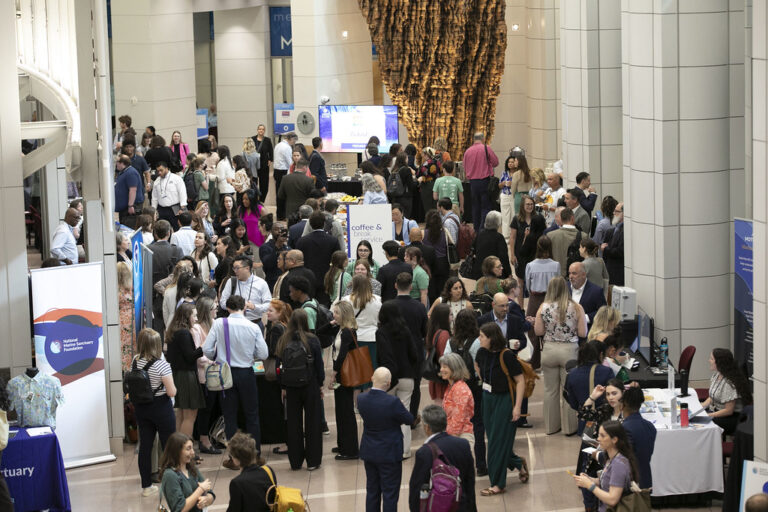
Celebrating Capitol Hill Ocean Week June 2-4 |
|
Source: Capitol Hill Ocean Week Website |
|
| Capitol Hill Ocean Week (CHOW) is the nation’s premier ocean and Great Lakes policy conference, hosted by the National Marine Sanctuary Foundation. Policymakers, scientists, entrepreneurs, conservationists, educators, and youth leaders come together to discuss and debate the most significant issues impacting our ocean and Great Lakes, to generate innovative solutions to these challenges and to build networks. By showcasing the cutting-edge advancements and emerging leaders that are shaping the future of ocean stewardship, CHOW 2026 spotlights transformative change across science, culture and heritage, resiliency, and innovation. Capitol Hill Ocean Week celebrates 25 years as the Nation celebrates its 250th anniversary. This year’s conference includes film screenings as well as sessions on topics such as working waterfronts, fishing, and maritime history. A full agenda can be found here. Registration for virtual attendance can be found here. |
|
Advocacy Opportunity – CZM Support Statement |
|
| In spite of a decades-long track record of bipartisan support, the Administration’s budget request for next year has once again proposed eliminating state and territory coastal management programs. Ending federal funding for CZM would jeopardize the important work of these programs across the nation. We need your help! Please sign on to the Coastal Zone Management (CZM) Program support statement, asking the Administration and Congress to fund CZM programs! We are actively seeking signatures from businesses and local governments, and will also include community-based organizations, academic institutions, land trusts, tribal nations, and non-profits. Individual citizens can sign on too, to share their support. Please sign on to this important statement showing your support, and share this opportunity with other businesses, local governments, and organizations that may be willing to sign on! |
|
| In the States and Territories |
|
| Mobile-Friendly, Interactive Map Available for North Carolina Beach and Waterfront Access Locations As the summer beach season begins, the N.C. Department of Environmental Quality’s Division of Coastal Management (DCM) Public Beach and Coastal Waterfront Access Program reminds coastal residents and visitors about its helpful, interactive public beach and waterfront access map. The map can be accessed directly from mobile devices and desktops to help locate public beach and waterfront access sites along North Carolina’s coast. The online map provides information on the location and amenities available at more than 800 local, state and federally funded public access sites along the ocean beaches and estuarine waters of North Carolina. DCM provides funding for land acquisition and construction projects that improve pedestrian access to the state’s beaches and waterways through its Public Beach and Coastal Waterfront Access Program. The program has awarded 538 grants totaling more than $56.7 million to improve public waterfront access sites since it began in 1981. Access projects may include walkways, dune crossovers, restrooms, parking areas, piers and related projects. Read more here. NH Sea Grant Awards $1.2 Million in Funding for Coastal and Marine Research in New Hampshire New Hampshire Sea Grant will support six research projects over the next two years that address topics of particular importance to New Hampshire and the region, including PFAS contamination, coastal flooding, seafood safety and management, salt marsh restoration, and the northward expansion of marine species. Researchers in the Granite State have been awarded $1.2 million in funding to complete the work. The projects are approved by the National Oceanic and Atmospheric Administration (NOAA). “Sea Grant funding makes it possible for researchers to tackle problems in local marine and coastal systems that are important to New Hampshire residents and ultimately benefit our communities,” says Adrienne Kovach, professor of natural resources at the University of New Hampshire, who will lead a new study on Atlantic cod that builds upon previous Sea Grant research about the iconic Gulf of Maine fishery. Read more here. |
| Louisiana – Artificial Reefs Under Construction to Restore Fishery Habitats Two new artificial reefs are being built simultaneously at Port Wonder and Cutoff Point to restore fishery habitats along the coastline and provide long-term benefits to the Lake Charles coastal ecosystem. Officials with the Coastal Conservation Association of Louisiana and the Louisiana Department of Wildlife and Fisheries gathered at Port Wonder on Monday to announce that work on the two reefs was officially underway. The project represents a major step forward in CCA’s mission to restore Louisiana’s nearshore habitats that local saltwater fisheries depend on, which have been diminished by coastal erosion and environmental factors. The Lake Charles reefs are now the 64th and 65th to be created across the state. “Every reef we build is a direct investment in the future of Louisiana’s fishery,” Rad Trascher, CEO of CCA Louisiana, said. “More structure means more forage, more juvenile fish survival, and more opportunities for the anglers and families who make Louisiana’s coast their backyard.” Read more here. Gulf Blue Demo Day Showcases Sustainable Solutions to Coastal Problems During Innovation Week In May the University of Southern Mississippi held Innovation Week for the Gulf Blue Program, which means investors, entrepreneurs and startup companies flocked to the coast, hoping to become a part of Mississippi’s blue economy. The Gulf Blue program held Demo Day, a public showcase featuring six startup companies developing technologies for the blue economy, at Lynn Meadows Discovery Center. This year Demo Day focused on coastal resilience, including companies working to develop technologies to reduce erosion and restore habitats. Companies like Reef Arches of West Palm Beach, Florida, are working to protect the coastline. The company makes half-ton blocks that are helping to fight erosion while providing habitats for coral and oyster growth. Read more here. |
| H2Ohio and ODNR Celebrate the Completion of New Wetland Project in Northwest Ohio As part of Ohio Governor Mike DeWine’s H2Ohio initiative, the Ohio Department of Natural Resources (ODNR) today celebrated the completion of the H2Ohio Mallard Club Wildlife Area Wetland Connection and Restoration project. The project enhances 43 acres of coastal marsh into high-quality wetlands that will treat nutrient runoff. The H2Ohio Mallard Club Wildlife Area project, completed in partnership with Ducks Unlimited, will divert nutrient runoff into a wetland, where natural processes will reduce sediment, phosphorus, and nitrogen before the water returns to nearby ditches and ultimately flows to Lake Erie. The completed wetland also connects to four existing wetlands located nearby, using a pump system, allowing the water to flow through all the wetlands for maximum filtration of nutrients and sediment. “The Mallard Club Wildlife Area is located in the Maumee Bay of Lake Erie and has a role to play in improving water quality for people who enjoy this part of the coast as well as the wildlife that call this area home,” said ODNR Director Mary Mertz. “It’s thanks to our partners that we continue this important work on Lake Erie’s coastline.” Read more here. Great Lakes Climate Corps and Great Lakes Tribal Conservation Corps Help Clean up McCarty’s Cove McCarty’s Cove was the spot of just one of the efforts to help clean Lake Superior and its beaches. The Great Lakes Climate Corps and Great Lakes Tribal Conservation Corps walked the beach to help clean the area for tourists and locals. Great Lakes Climate Corps Project Manager Tyler Penrod says this cleanup is just part of a bigger project in the last few years to collect marine debris from Lake Superior. “It’s such a beautiful natural resource and asset that we have to fuel our lives. I mean it’s our drinking water, it’s where we play, it’s where we recreate,” Penrod said. “So, keeping that clean is really essential for our environment and human health and our enjoyment as well.” Read more here. |
| Washington – Ecology Field Crew Sampling Wetlands Statewide this Summer Beginning this month through September, Washington Department of Ecology’s wetland field crew will be out in the field collecting data at 26 randomly selected wetland sites across Washington, as part of the 2026 National Wetland Condition Assessment. The information they collect will help build a better understanding about the actual ecological health of the nation’s wetlands. The team will be sampling vegetation, soils, hydrology, algae, water chemistry, and potential disturbances, or “stressors,” at each site. Conducted nationally every five years, the 2026 assessment is the fourth collaborative survey since 2011. In addition to wetlands, other National Aquatic Resource Surveys examine the conditions of U.S. lakes, coastal areas, and rivers and streams. Past surveys have revealed many wetlands in Washington are in poor condition, mostly due to the presence of non-native plant species such as reed canary grass. Read more here. California – NOAA and Partners Tackle Coastal Resilience at Scotte Creek Beach Workshop On April 14, 2026, experts convened for the third workshop in a series focused on enhancing coastal resilience of California roadways. The workshop centered on a case study of Scott Creek Beach, a rural site in northern Santa Cruz County that serves as a vital habitat for endangered species and a critical link in the state’s transportation network. A team of representatives from the California Department of Transportation (Caltrans), the California Coastal Commission, Greater Farallones and Cordell Bank National Marine Sanctuaries, the Greater Farallones Association, and Point Blue Conservation Science led the workshop. Scott Creek is a high-energy wave environment where the lagoon, river, dune, and marsh systems are currently constrained by the existing Highway 1 configuration. At this site, Highway 1 has had emergency stabilization actions applied but a deteriorating bridge and need for a more resilient roadway resulted in Caltrans and California Coastal Commission collaborations to address the unique needs of the site. Ideally, a proactive adaptation project will move forward before additional emergency maintenance costs deplete the state budget, sidelining projects with better return on investment. Read more here. |
| [NEW] TNC Launches New Tool for Coastal Resilience TNC and partners released a first‑of‑its‑kind Coastal Resilience methodology that quantifies, in U.S. dollars, the flood-protection value mangroves and tidal marshes deliver to coastal property and communities. Natural protections like mangroves and tidal marshes absorb incoming wave energy at higher rates, protect against storms at lower costs, and provide co-benefits like carbon absorption that mitigates future climate impacts. If a portion of our current protection spending was shifted toward nature‑based solutions, infrastructure needs would reduce, maintenance costs would lower and future flood damages could be avoided. Learn about the tool here. [NEW] NOAA Announces New High-Resolution Land Cover Data NOAA has announced the availability of new high-resolution land cover data—used to document key geographic and landscape features covering Earth’s surface—for coastal communities in Puget Sound, Rhode Island, Northeast Ohio, Mississippi, and Alabama. This new data can be used to protect communities from flooding, inform wetland restoration projects, improve water quality, and more. The data are available from the Digital Coast website. Please reach out to Nate Herold (nate.herold@noaa.gov) if you have any questions. SASMI State Roadmaps SASMI is excited to announce their State Roadmaps are complete! Developed through local, state, and federal collaboration by State Implementation Teams (SITs), the roadmaps identify and prioritize the objectives, actions, and pathways necessary to implement the regional SASMI Plan at the state level. They serve to 1) prioritize and support effective deployment of resources to advance SASMI actions, 2) track and demonstrate progress, and 3) support and deepen collaboration, coordination, and engagement across the SASMI geography. Learn more here. National Regional Invasive Species and Climate Change Network The Regional Invasive Species and Climate Change Network is a network led by USGS and consortium universities. The goal is to reduce the combined effects of climate change and invasive species by synthesizing relevant science, sharing the needs and knowledge of practitioners, building stronger scientist-practitioner relationships, and conducting priority research. There are currently 4 coastal RISCCs in the Northeast, Southeast, Northwest, and Pacific. Learn more here. Call for Abstracts ASBPA 100th Anniversary Conference The American Shore and Beach Preservation Association (ASBPA) is pleased to announce a Call for Abstracts for the National Coastal Conference, celebrating 100 years of shore and beach preservation, to be held in New Jersey where in 1926 the first beach preservationists seeded a revolutionary idea for future coastal protection. The ASBPA National Coastal Conference, October 5-8, 2026 in Atlantic City, New Jersey, welcomes all coastal managers and stakeholders to learn the latest science, engineering, and policy needed to maintain and improve the health of our beachfront and estuarine shorelines and ecosystems, while developing collaborative networks to promote best management practices. Abstracts are due August 15th for Poster Presentations. View the call for abstracts here. Requesting Applications for 2026 New Hampshire Coastal Resilience Grant Projects The New Hampshire Department of Environmental Services (NHDES) Coastal Program is requesting 2026 Coastal Resilience Grant (CRG) applications for projects. Projects must take place in one or more of New Hampshire’s Coastal Zone communities. The CRG funding opportunity supports projects that build capacity, advance planning, and develop designs to increase coastal resilience, with specific focus on community and/or habitat resilience. Approximately $100,000 in CRG funding is available. Applicants must request a minimum of $15,000 and no more than $40,000 per project. Funds are made available to the NHDES Coastal Program through the National Oceanic and Atmospheric Administration Office for Coastal Management, under the Coastal Zone Management Act. For instructions, evaluation criteria, and to access the Application Form, visit the CRG website. Funding Opportunity: Fiscal Year 2024 & 2025 Building Resilient Infrastructure and Communities The Building Resilient Infrastructure and Communities (BRIC) grant program makes federal funds available to states, U.S. territories, federally recognized tribal governments, and local governments for hazard mitigation activities. It does so by recognizing the need to upgrade and modernize the nation’s infrastructure against the growing risks to communities and the need for natural hazard risk mitigation activities that promote resilience with respect to natural hazards. For this funding opportunity, the program prioritizes investment in infrastructure and construction projects that deliver immediate, measurable risk reduction to communities vulnerable to natural hazards. BRIC emphasizes the adoption and enforcement of modern building codes and limits capability- and capacity-building activities to those directly tied to infrastructure resilience, such as building code adoption and enforcement. Apply here. |
|
| The views expressed in articles referenced here are those of the authors and do not represent or reflect the views of CSO. If you have a news item or job posting to include in future CSO Newsletters, please send an email to: ecrocco@coastalstates.org with a subject line: “Newsletter Content”. Please include the information to be considered in the body of the email. Please note: CSO reserves final decision regarding published newsletter content and may not use all information submitted. |
|
| Coastal States Organization | 50 F Street. NW, Suite 570, Washington, DC 20001 | 202-800-0580 | cso@coastalstates.org | www.coastalstates.org |
|
|
|
|