The Coastal States Organization represents the nation’s Coastal States, Territories, and Commonwealths on ocean, coastal, and Great Lakes resource issues. Having trouble opening links? View this on our website: https://coastalstates.org/resources/ |
|
CSO on the Passage of the FY 2026 Commerce, Justice, and Science Funding Bill |
|
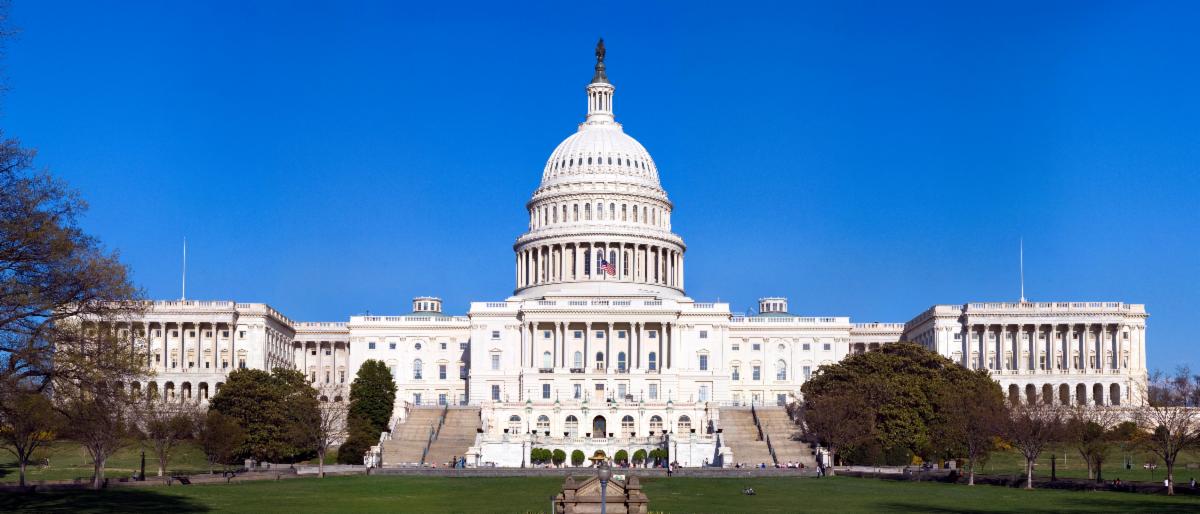
| Last Thursday, the Senate passed an FY 2026 Commerce, Justice and Science (CJS) appropriations bill as part of a minibus package that also included the Interior and Environment, and Energy and Water Development funding bills. The package passed in the House of Representatives last week and is now headed to the President’s desk for signature. Coastal States Organization was pleased to see that the bipartisan CJS bill passed by Congress maintains level funding for coastal zone management programs at $81.5 million for fiscal year 2026. This funding, which is matched dollar-for-dollar, supports the core work of state and territory coastal zone management programs around the United States. Without this funding, these programs would not be able to carry out their mandated mission of providing effective management, beneficial use, protection, and development of the coastal zone. The bill also funds Congressionally directed community projects and other coastal programs at NOAA. This year, in a positive step, the funding amounts for CZM and other accounts under NOAA’s National Ocean Service are incorporated into the bill text itself. This ensures that the levels agreed upon by Republicans and Democrats in Congress are legally binding, giving the Administration, which had proposed eliminating CZM programs in its annual budget request, less discretion on how funds are spent. While CSO appreciates the efforts of appropriators to protect the overall funding for core coastal programs, doing so came at a cost. The CJS funding bill eliminates all unobligated Bipartisan Infrastructure Law funds for FY 2026 within NOAA. This includes all final year (year 5) CZM capacity and competitive funds, as well as remaining BIL funds for aligned programs (National Estuarine Research Reserve System, Regional Ocean Partnerships, etc.). These funds, totaling tens of millions of dollars, were intended for building state and territory capacity to effectively prepare for and manage coastal hazards and projects to conserve, protect, and restore coastal habitats, supporting coastal economies, and engaging local coastal communities. The appropriations bill also included funding for coastal related programs at U.S. Fish and Wildlife Service and Environmental Protection Agency and US Army Corps of Engineers. The passage of the bill eliminates concerns of a government shutdown at the end of the month impacting NOAA, EPA, Army Corps, and other agencies funded in this package. |
|
| In the States and Territories |
|
| Rhode Island – Coastal Resources Management Council Approves Jamestown Oyster Farm Expansion A Jamestown oyster farm is poised for expansion, after receiving unanimous approval from the Rhode Island Coastal Resources Management Council. The council’s swift stamp of approval lets Rocky Rhode Oyster Co. owner Brad Boehringer add 3.5 acres to his existing, 7.8-acre oyster farm in Jamestown’s Dutch Island Harbor. Rocky Rhode is one of six aquaculture farms covering a combined 35 acres within a 90-acre area in Dutch Island Harbor designated for aquaculture use, according to a 2024 report. The report helped inform a working group of town officials and state environmental administrators in developing rules and regulations for future aquaculture development in the area. Read more here. Four Coastal Connecticut Communities Awarded Grants for Climate Resilience Projects Four coastal communities in Connecticut have been awarded a total of $268,048 in grants to support five climate resilience projects as part of the Long Island Sound Resilience Planning Support Program. The Town of Stonington will consolidate existing resilience projects, identify data gaps through community engagement, prioritize projects and better understand its future risks regarding sea level rise, severe weather, and tideland preservation. The City of Bridgeport will catalog natural resources, habitats, and wildlife and identify gaps and opportunities for improvement within its existing environmental plans. The Long Island Sound Resilience Planning Support Program was launched in October of 2023 by New York Sea Grant and Connecticut Sea Grant professionals to help communities in the region identify, conceptualize, and develop projects that help them meet their sustainability and resilience goals. The program is funded by the EPA through the Long Island Sound Partnership. Read more here. |
| Texas – Commissioner Buckingham Announces Partnership with U.S. Army Corp of Engineers for Stabilization and Nourishment Project at Sargent Beach In December, the Texas General Land Office announced that the federal Sargent Beach Stabilization and Beach Nourishment project, led by the United States Army Corps of Engineers (USACE), in partnership with the GLO, Matagorda County, and the Port of Bay City Authority, recently awarded a construction contract to Orion Government Services, LLC. This critical development means this highly anticipated and much needed project is one step closer to starting. The Sargent Beach area of Matagorda County has one of the highest historical erosion rates on the Texas Gulf coast. Erosion rates vary from 42.88 feet/year at the shoreline near Mitchell’s Cut on the far west area of Sargent Beach to 20-23 feet/year along the “historic” section of Sargent Beach, east of FM 457. This project will first construct a rock terminal groin adjacent to the north side of Mitchell’s Cut and build five (5) nearshore rock breakwaters. Next, the project will complete an approximately 1 million cubic yard beach nourishment effort utilizing beach-quality material to be dredged by USACE from the mouth of the Colorado River inlet. Read more here. How Swamps Act as Natural Flood Control Systems for Coastal Louisiana Coastal Louisiana’s swamp ecosystems play a critical role in managing flood risk across the region. These wetlands function as natural water control systems, absorbing excess rainfall, slowing storm surge, and reducing the impact of flooding on surrounding communities. Swamps act as natural sponges during heavy rainfall events. Dense vegetation, saturated soils, and interconnected waterways allow large volumes of water to be absorbed and temporarily stored. Instead of rainfall immediately flowing into rivers, canals, or urban drainage systems, swamps slow the movement of water, reducing peak flood levels downstream. During major storm events, this delayed release of water can significantly lessen flooding severity in nearby towns and cities. By spreading water across a broad landscape, swamps lower the pressure placed on levees, drainage canals, and man-made flood control systems. This buffering effect becomes especially important during prolonged rain events when infrastructure can become overwhelmed. Read more here. |
| Port Washington Achieves 15 Years of Certification as a Wisconsin Clean Marina It was the first marina in the state to get a clean certification, and now the Port Washington Marina has earned its place as one of the most environmentally responsible marinas in Wisconsin. Known for its state-of-the-art facilities, including exceptional stormwater management, a large fish cleaning station to manage fish waste, meticulous fueling practices, and robust boater education efforts, the marina received a Wisconsin Clean Marina recertification, marking 15 years of commitment to protecting Lake Michigan. The Wisconsin Clean Marina Program was launched in 2010, with Port Washington the first marina certified. A decade and a half later, 25 additional Wisconsin marinas have voluntarily stepped forward to adopt best management practices for their facilities. The Wisconsin Clean Marina Program is administered by Wisconsin Sea Grant in partnership with the Wisconsin Marine Association, Wisconsin Coastal Management Program, Wisconsin Department of Natural Resources, and Fund for Lake Michigan. Read more here. Runaway Research Buoy Gets Data on Great Lakes Winter Waves Last winter, a basketball-sized buoy off Muskegon, Michigan, broke free from its mooring. Set up to track temperature and wave height, it remained out on the lake and collected data scientists have chased for years: real-time measurements of what happens in the open water far from shore. It’s some of the first data that exists on how ice and waves collide during the most treacherous season on the Great Lakes. The runaway buoy broke loose in mid-January, drifting about 33 miles and nearing the center of Lake Michigan. Strong winds eventually pushed it back into an icy area south of Grand Haven, where it became wedged in thick ice, providing data on how much ice actually dampens strong waves. What it revealed was that the models scientists used were dampening waves more than they should. The actual waves under ice cover are much higher than the models predicted. Read more here. |
| California – Santa Ana Completes $2.8 Million in Improvements for Santiago Park Santiago Park, a roughly 34.5-acre community park and one of Santa Ana’s larger green spaces, will move into a third phase of planned improvements this coming year. The park runs alongside Santiago Creek, stretching from Main Street toward the 22 Freeway, with recreational amenities including picnic areas, playgrounds and tennis and basketball courts, as well as an archery range, a lawn bowling green, and an interpretive wildlife center. City officials in Santa Ana marked the completion of Santiago Park’s second phase of improvements earlier this month. They were funded by the California Coastal Conservancy at a cost of $2.8 million. New upgrades include improved picnic areas, Santiago Creek overlooks, lighting, and updated landscaping and irrigation. The work also includes a new monument at the park’s Main Street entrance, along with new pedestrian and bike paths that connect to the Santiago Creek Bike Trail. Read more here. Washington – State Lawmakers Provide Hoquiam $17 Million for Critical Flood Mitigation Project The Washington Legislature has awarded $17 million to the coastal cities of Aberdeen and Hoquiam to help fund the $160.5 million Aberdeen-Hoquiam Flood Protection Project in Grays Harbor County. Since sizable portions of Hoquiam and Aberdeen are located at or near sea level, flooding has historically impacted low-lying areas within the two cities — especially between the Wishkah and Hoquiam rivers, north of the Chehalis River and Grays Harbor. For years, Aberdeen and Hoquiam have worked together to design, permit and build the project which entails constructing nearly 11 miles of earthen, concrete and sheet pile levees — the 6.2-mile North Shore Levee and 4.7-mile North Shore Levee-West Project. Once the levees are built, the project will protect 5,100 properties, 1,354 businesses, nearly 1,300 jobs and local infrastructure including roads, bridges and utilities. Read more here. |
| National Shoreline Management Study – Pacific Islands and Commonwealth Regional Assessment Our U.S. Army Corps of Engineers (USACE) National Shoreline Management Study (NSMS) team is pleased to announce that the final NSMS U.S. Pacific Islands Regional Assessment report is available to download. The NSMS regional assessments represent a USACE-led collaborative effort, highlighting the physical, economic, environmental, social, and cultural impacts of shoreline change that result from natural and human-induced influences on coastal processes across every coastal region of the United States. NSMS reports provide national and local government policymakers, coastal scientists and engineers, academia, indigenous peoples, Tribal nations and representative groups, and other coastal interests and decision-makers key findings and recommendations regarding erosion and accretion and their causes. Learn more here. Boat US Foundation – Capturing Abandoned and Derelict Vessels across the US, Freely Associated States, and US Territories The BoatUS Foundation for Boating Safety and Clean Water has developed this reporting database to identify and track Abandoned and Derelict Vessels (ADVs) in the United States, Freely Associated States, and U.S. Territories. BoatUS Foundation is collecting information, through individual reports, to understand the scope of the problem of ADVs and track prevention and removal efforts by states and partners. ADVs pose navigation, safety, and pollution hazards to the communities where they are located. With your help, we can understand this issue better and work together towards solutions that prevent future ADVs. This project was made possible and supported by the National Oceanic and Atmospheric Administration Marine Debris Program. Learn more here. Funding Opportunity: Climate Smart Communities Initiative CSCI awards provide funding and technical assistance to advance community-based climate resilience in US communities or regions that are highly vulnerable to the impacts of climate change. The total grants budget is $1.5-2 million and grants typically range from $75,000 to $115,000 based on the scope of work proposed in the application. CSCI anticipates awarding between 16-20 grants for the 2026 cycle. The program prioritizes funding for communities that include historically disinvested populations at increased risk to climate-related impacts. It is open to US-based project teams composed of a climate adaptation practitioner and representatives from a local or regional government entity and a community-based organization. The application deadline is March 12, 2026. Learn more here. Great Lakes Climate Adaptation Resource Guide For hundreds of small and medium-sized communities across the Great Lakes region, preparing for the water-related impacts of changing weather patterns can be challenging. The International Joint Commission’s (IJC) Great Lakes Water Quality Board has developed a new Great Lakes Climate Adaptation Resource Guide. The guide highlights tools and approaches (including the CALM community of practice!) to help communities integrate Great Lakes water topics into their climate adaptation and resilience strategies. For additional information, read the one-pager or view the informational webinar. Read the full guide here. Coastal Southeast Technical Assistance Application For those that haven’t heard, the Coastal Stormwater Center of the Southeast (CSC) is one of four EPA-funded Stormwater Centers of Excellence across the U.S. The Center for Watershed Protection is honored to lead the CSC alongside an incredible team of partners: University of Florida, East Carolina University, North Carolina Coastal Federation, Clemson University, Virginia Tech, University of Georgia, and Auburn University. Through the CSC, we’ll be offering technical assistance at no cost, to state, Tribal, and local governments and environmental non-profits tackling stormwater challenges across coastal VA, NC, SC, GA, FL, and AL. This is just one of the many initiatives we’ll be rolling out to support resilience and innovation across the region. Learn more here. Funding Opportunity: Great Lakes Restoration Community Grant Program The Great Lakes Restoration Community Grant Program (GLRCGP) application is now open! The program’s primary goal is to fund restoration projects in Great Lakes communities with environmental concerns in support of GLRI objectives and offer technical assistance and minimize administrative challenges associated with applying for and managing federal grant funds. Cities, states, Tribes and nonprofit organizations representing Great Lakes communities can apply directly to the Great Lakes Restoration Community Grant Program. The submission deadline for Letters of Intent is January 16, 2026. Learn more here. Funding Opportunity: $1.45 Billion in Supplemental Economic Funding Available for Disaster Recovery The United States Economic Development Administration has announced the Notice of Funding Opportunity (NOFO) for its Fiscal Year (FY) 2025 Disaster Supplemental Grant Program. This program makes approximately $1.45 billion available to areas that received major disaster declarations in the calendar years 2023 and 2024 for economic recovery activities. Funds can support both construction and non-construction projects. State and local governments, Native tribes, higher education institutions, public or private non-profit organizations that work with local government, economic development organizations, and public-private partnerships for public infrastructure are eligible. The EDA will fund up to 80% of the project with higher percentages available for severely distressed applications and Tribal organizations. Applications are accepted on a rolling basis until funds are spent for Readiness and Implementation path projects, while Industry Transformation grants will be due March 3, 2026. For more information, contact Rania Campbell-Bussiere. |
|
| The views expressed in articles referenced here are those of the authors and do not represent or reflect the views of CSO. If you have a news item or job posting to include in future CSO Newsletters, please send an email to: ecrocco@coastalstates.org with a subject line: “Newsletter Content”. Please include the information to be considered in the body of the email. Please note: CSO reserves final decision regarding published newsletter content and may not use all information submitted. |
|
| Coastal States Organization | 50 F Street. NW, Suite 570, Washington, DC 20001 | 202-800-0580 | cso@coastalstates.org | www.coastalstates.org |
|
|
|
|